
Why Men Should Care About Intimate Training
In a world of constant stimulation and digital overwhelm, many men find themselves feeling disconnected — not only from others, but also from their own bodies. Performance pressure, tension, and mental fatigue can all manifest in subtle but deeply frustrating ways, especially when it comes to confidence, intimacy, and physical presence.
Intimate training—a mindful, physical approach to core and pelvic health—offers more than just physical benefits. It’s a powerful tool for:
- Reclaiming internal control and body awareness
- Rewiring mental patterns around desire and performance
- Improving circulation and core strength
- Releasing built-up tension in the hips and groin
- Restoring confidence from the inside out
This isn’t just about muscles—it’s about grounding, centering, and rebuilding your connection to yourself.
When Something Feels “Off” — But You Don’t Know How to Fix It
You may not talk about it.
You may not even have words for it.
But you know the signs:
Moments when your body doesn’t respond the way it used to.
A disconnection between your thoughts, your breath, and your physical self.
A nagging sense that something fundamental is out of sync.
For men in their 30s, 40s, or beyond, it’s not uncommon to go through phases of physical or mental disconnection — often triggered or prolonged by stress, poor lifestyle habits, overexposure to artificial stimulation, or emotional avoidance.
But here’s the good news:
The body can relearn, rewire, and recover — with patience, consistency, and a more embodied approach.
A Gentle Yet Powerful Routine
Goal: Strengthen pelvic floor muscles, improve blood flow, release tension, and retrain the mind-body connection.
Pelvic Floor Awareness & Activation
As a man, you can locate your pelvic floor muscles in four different ways:
- Stand naked in front of a mirror and contract or tighten your pelvic floor muscles. If you are using the correct muscles, you should feel the base of the penis draw in and see the scrotum lift.
- Urine Flow Interruption (Occasional Use Only)
Briefly stop your urine flow midstream to identify the muscles you are engaging.
Take note of how it feels when you contract and release them.
However, this method should not be used frequently, and Kegel exercises should not be performed with a full bladder, as this can lead to urinary tract infections. - Tighten the muscles you use to hold back a fart.
- Insert a clean finger into your anus and squeeze it against your finger without using your abdominal, buttock, or thigh muscles to squeeze.
Frequency & Format
- Practice: 4–6x per week
- Duration: 25–30 minutes
- Rule: Never overstrain. Quality over quantity.
- Best time: Morning (to energize) or evening (to calm the system)
Warm-Up (5–10 min)
Diaphragmatic Breathing (3–5 min)
- Lie on your back, knees bent
- Inhale deeply, expanding your belly
- Exhale slowly, gently engaging your core
- Let your mind follow your breath into your lower body
Pelvic Tilts
Core & Pelvic Floor Strengthening (15–20 min)
Basic Kegels and Elevator Kegels
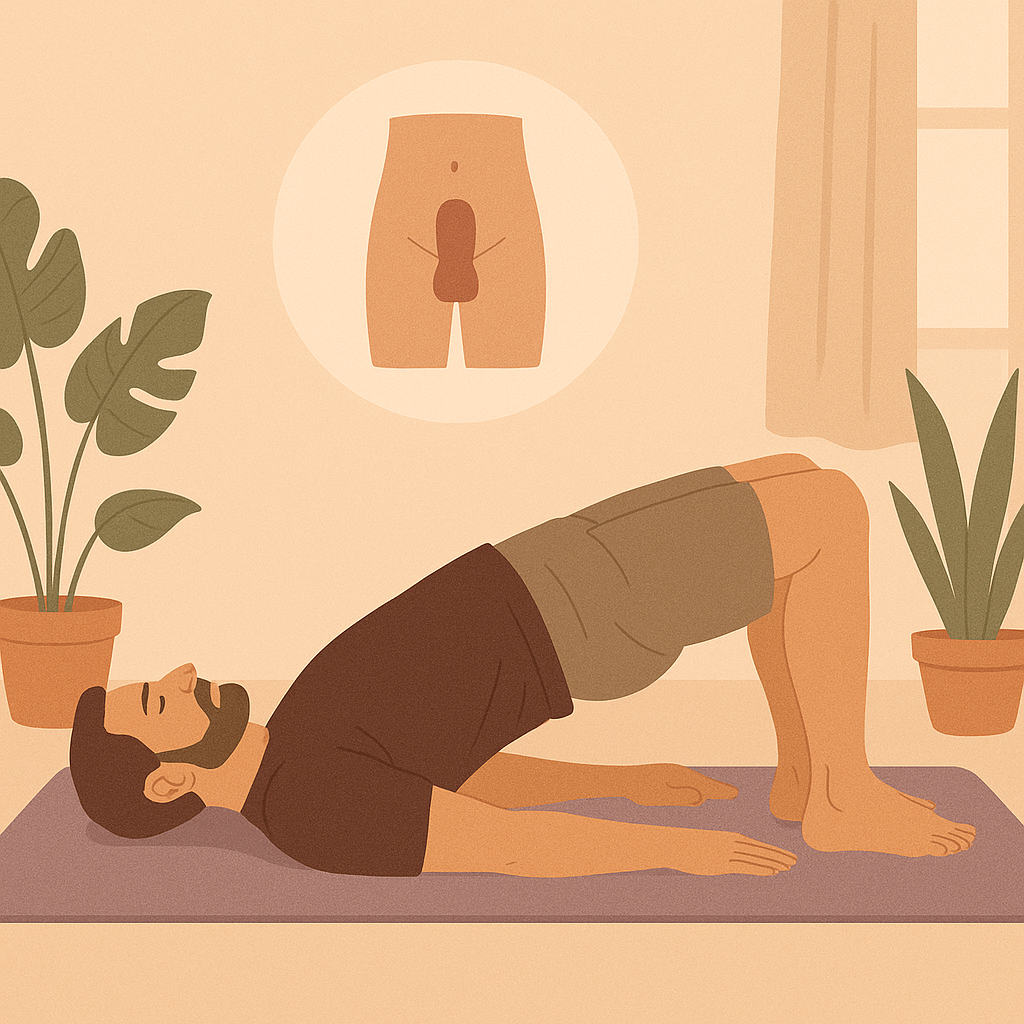
Bridge Pose
Bound Angle Pose
Deep Squat / Malasana
🔹 Cool-Down & Relaxation (5–10 min)
Child’s Pose
9. Legs-Up-the-Wall
Mental & Emotional Reset Tips
This journey isn’t purely physical. Mindset, emotion, and habit change matter just as much.
Rewiring from Within
- Step away from overstimulation – Whether gradually or cold turkey
- Train for real connection – Eye contact, emotional presence, physical touch
- Reflect – What am I avoiding? What do I actually need?
- Seek support if needed – A coach, therapist, or group can guide deeper shifts
Lifestyle Habits That Support the Process
- Sleep: 7–8 hours
- Nutrition: Real food, healthy fats, zinc & magnesium
- Sunlight: Daily exposure helps mood and hormone balance
- Limit alcohol & caffeine
- Stay hydrated
What to Expect Over Time
- Weeks 1–4: Mood swings, restlessness, maybe a “flatline”
- Weeks 5–8: Mental clarity returns, more physical presence
- Weeks 9–12+: Gradual rebuilding of energy, intimacy, and confidence
This isn’t just about “function.” It’s about restoring wholeness, self-trust, and a more natural way of being in your body.
If this resonates, you’re not alone.
And you’re not broken.
This is your body asking you to return to it.
One breath, one contraction, one moment at a time.