Fun and Meaningful Stories from Everyday Preschool Life with the Bunny Group
Questions, tasksPedagogical ReflectionPsychological reflectionParent-focused reflectionGames from the storyPoem, Nursery Rhyme, songTale in the storyDownloads
This morning, I wake up early. As the first rays of sunlight shine through my bedroom window, I remember—today, new children will join our class. Even though this happens every year, the excitement never fades. I love watching how little ones slowly open up and start feeling at home in our safe little preschool world.
As I think about our day, I realize we don’t yet have a project for the beginning of the year. We haven’t voted on a topic with the older kids. And the new children will need to learn the basics quickly, since we’ll soon go on a field trip. We need a topic that’s fun and useful, one that sparks the little ones’ imagination and keeps the big kids interested.
What should our new project be? I wonder.
As I flip through ideas in my mind, it suddenly comes to me—transportation! Yes, vehicles and traffic rules are sure to interest the boys, and the little ones can learn how to travel safely.
When I arrive at the preschool, I see Mrs. Wilson is already welcoming the early birds. Some of our returning kids are here—Clara and Willow. They started in September and are now in the younger group. They’re setting up a tea party in the play kitchen. Willow came with her big sister Florence, who is in the oldest group.
Daisy and Reed from the older group are here too. They sit down at a table. Daisy and Florence start drawing, while Reed asks Mrs. Wilson for a colouring page. I greet them all with a warm smile just as our three new members arrive—Mia, Arthur, and Kendall.
Clara and Willow already feel at home since they were together in daycare. Mia also attended daycare, though in another country, so preschool isn’t entirely new for her. But Arthur and Kendall still feel shy, so their moms stay for the settling-in period.
I call over some of the returning kids and our older ones, Daisy and Florence, and ask them to help their new friends feel welcome. They’re thrilled to help—they love looking after the younger ones. This caring spirit quickly brings harmony to the group.
“Children,” I say cheerfully, turning to the class, “now that we’re all together again, we’re going to start a new project. The theme will be transportation! In the coming weeks, we’ll learn how to travel safely, how to behave on the street or on a bus, and what kinds of exciting vehicles there are. We’ll play lots of games and maybe even go on a field trip.”
The little ones look at me with curious eyes, so I explain what a “project” means in simple words.
“And we’ll start by voting for our theme title!”
I show them three playful titles:
Látom, hogy csak páran teszik fel a kezüket. Úgy látszik ez nem elég lelkesítő.
“Clickety-Clack, Here Comes the Truck!”
“Dusty Road, Rattling Car”
“Carrot Bus with a Skeleton Driver”
“Who votes for the first one, Clickety-Clack?” Only a few hands go up.
“And the second one, Dusty Road?” A few more this time.
“What about the last one, Carrot Bus with a Skeleton Driver?” Most of the hands shoot up.
That settles it! I tell them we’ll play games, draw pictures, and read stories all about bus rides. That way, we’ll have fun while learning, and be ready for our exciting bus trip!
They’re excited and ready to start the day. Since we have so many new children, I decide to spend the day helping everyone get to know each other better. But first, I explain what the “Carrot Bus” is.
“It’s a funny little rhyme,” I say,
The bus is made of carrot sticks, its driver’s made of bone,
Parsley shouts the stops out loud, and cauliflower groans!
Cabbage Clara, Lettuce Lee,
Soup Town’s here—get off with glee!
The older kids begin repeating the rhyme right away. The younger ones keep playing—it hasn’t quite caught their interest yet.
Later in the morning, we dive into a group activity. I bring out big cardboard boxes and colorful paints. We start making traffic lights. I show them what red, yellow, and green mean—and even how sometimes the red and yellow show up together. Everyone paints several traffic lights. The younger kids love using their hands to paint.
But not everyone likes painting. Some kids prefer drawing or using crayons. Arthur, I notice, doesn’t like getting messy, so he grabs a chunky crayon instead.
For one of our big traffic lights, I cut out holes for each color—leaving just the outlines. It becomes a target game! When I say “Stop!”, the older kids have to aim for the red circle with a soft ball. When I say “Go!”, they aim for the green one. Luckily, we still have the yarn balls left over from the sock project.
Arthur doesn’t join the game or listen to the rhyme. He doesn’t even make a traffic light—he prefers to sit on his mom’s lap and watch. At least he drew something earlier.
Mia settles into the play kitchen with Willow and Clara. She seems comfortable now, despite the language barrier. Kendall, on the other hand, is full of energy. He’s already found his place and only glances at his mom once in a while—she seems a bit bored. So I ask her to help by cutting out pictures for tomorrow’s activity.
Before lunch, Mia and Kendall’s moms head home, seeing how well their kids are adjusting. Arthur won’t be staying for nap time, so before they leave, I tell his mom about our upcoming field trip and hand her a packing list.
“I’ll be working next week, but I don’t want Arthur to go alone,” she says. “Could my mom—Arthur’s grandma—come along too?”
“Of course! We love it when parents or grandparents join us,” I reply.
As my workday comes to a close, I see that the new children are already feeling more at home, and the older kids are helping them patiently. Daisy and Florence beam with pride as they tell me how much they enjoy being “big sisters” to the little ones. They don’t always set the best example though—at lunch, I had to remind them a few times not to giggle and talk so loudly.
Mrs. Johnson, today’s afternoon teacher, gives me a warm, reassuring smile. I know the new kids are in good hands. Yes, transportation was the perfect theme, and I can’t wait to explore it with them.
As I head home, I hear Mrs. Johnson begin the story The Tale of the Traffic Light. A perfect way to end the day.
Once upon a time, in a very busy city, there stood a tall and proud traffic light named Tilda. Tilda had three magical colors: red, yellow, and green. She stood at the corner of Giggle Street and Zoom Avenue, watching cars, buses, bikes, and people all day long.
Tilda took her job very seriously. When she shone her red light, she said in her big, strong voice: “Stop! Everyone freeze like statues!”
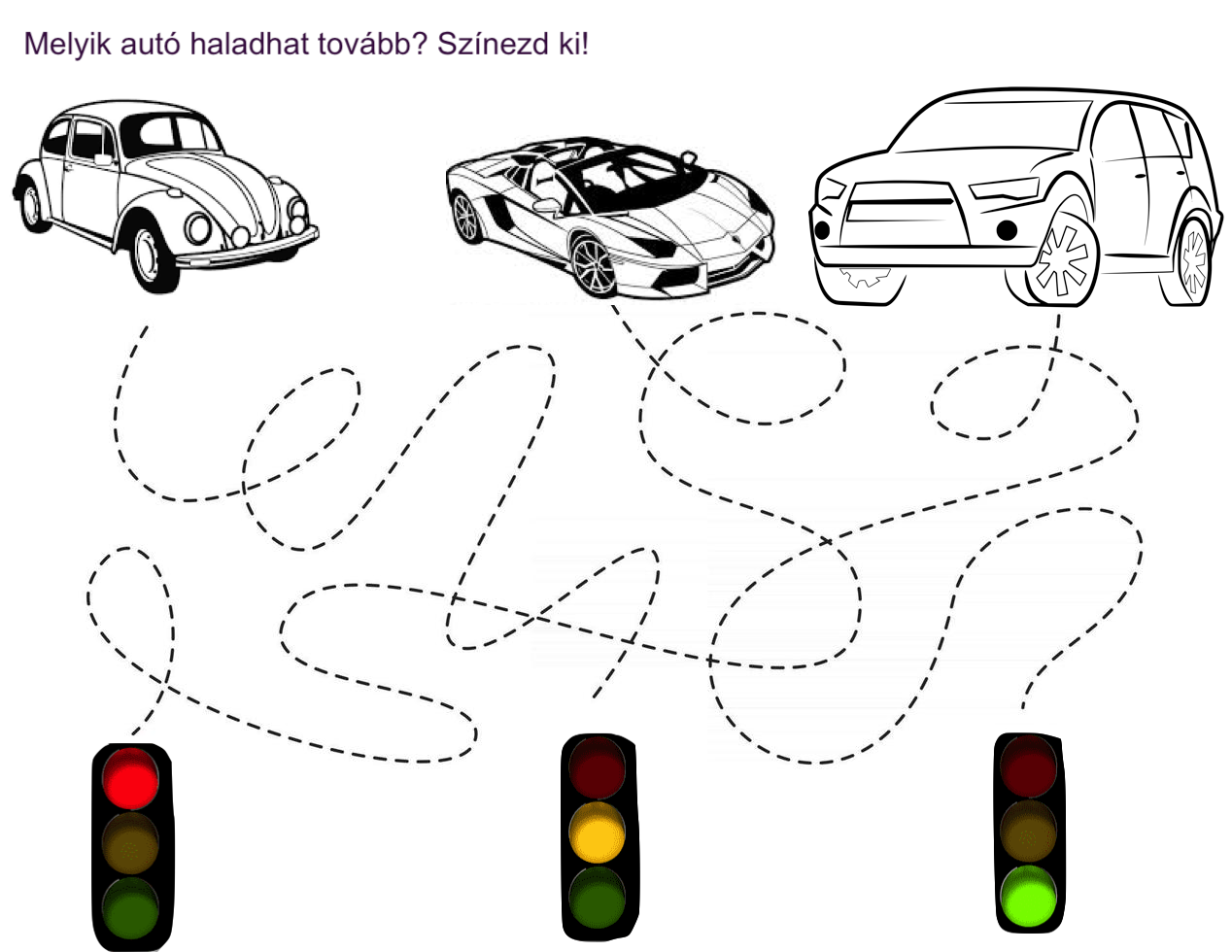
How would you color this picture? You can find it in the Downloads.
Then send it to us so others can see your wonderful creation too!
After Reading
How many bunnies did you find hiding in the pictures? Here’s a hint: each one has at least one!
Your City (Mrs Johnson’s Questions)
Comprehension and Memory (Clara’s Questions)
Emotions and Social Skills (Willow’s questions)
Problem Solving and Creativity (Daisy’s questions)
Lessons and Values (Florence’s questions)
Imagination and Play (Reed’s questions)
Empathy and Relationships (Mia’s questions)
Adventure and Exploration (Arthur’s questions)
Logical and Language Skills (Kendall’s questions)
Environment and Awareness (Newton’s questions)
Fantasy and Reality (Kara’s questions)
Experiencing the Story (Ms Wright’s questions)
Word Exploration
Riddles and Brain Teasers
Pedagogical Reflection
Supporting Integration and Settling-In
The story illustrates how an educator welcomes children from different backgrounds with care and flexibility. The teacher demonstrates emotional attunement and responsiveness to each child’s individual needs:
Arthur: His mother’s presence provides emotional safety. The teacher patiently supports his journey toward independence.
Mia: Despite language barriers, she begins to feel at ease quickly. The teacher focuses on creating a bridge of communication between her, the educator, and her peers.
Kendall: Energetic and bold, he quickly finds his place. The teacher gently guides his activity into constructive channels.
Fostering Social Bonds and Community
Involving older children: Daisy and Florence act as „big sisters” to help the newcomers. This strengthens group cohesion and promotes responsibility and care in older children, while offering a model for the younger ones.
Creating a family-like atmosphere: The teacher consciously nurtures a warm and supportive environment where new children can feel safe and quickly at home.
Introducing a Thematic Project
Transportation as the central theme: The chosen topic is both exciting and educational. Vehicles, traffic rules, and signs are interesting for children and provide real-life value.
Democratic decision-making: The project begins with a vote, empowering children to express preferences. This fosters self-confidence, inclusion, and a sense of ownership in the learning process.
Blending Learning and Play
Learning through play: Creating traffic lights, exploring colors, and repeating rhymes all support knowledge acquisition in a playful and meaningful way.
Encouraging visual and creative expression: Crafting with cardboard offers a hands-on experience that enhances fine motor skills and imaginative thinking.
Collaboration with Families
Parental involvement: Arthur’s and Kendall’s mothers are present during the settling-in phase. The teacher adapts flexibly, even welcoming Arthur’s grandmother on a future trip.
Open communication: The teacher maintains direct and clear communication with parents, building trust between families and the preschool.
Developing Emotional and Social Skills
Practicing empathy: Older children help new classmates, which also deepens their own emotional growth. This fosters acceptance and cooperation within the group.
Ensuring a secure environment: The teacher creates an atmosphere where every child can find their place and feel emotionally safe.
Stimulating Imagination and Creativity
Using rhymes: The playful and imaginative “Carrot Bus” rhyme encourages children to engage their fantasy and linguistic creativity.
Creative activities: Building traffic signs and lights supports not only thematic understanding but also visual storytelling and self-expression.
Conveying Values and Life Lessons
Understanding rules: The transportation theme gently introduces the importance of rules and why they must be followed.
Building community: The events in the story guide children toward understanding and practicing fundamental values of group life.
Addressing Individual Needs
Personalised attention: The teacher approaches each child individually—supporting Arthur’s anxiety, navigating Mia’s language challenges, and channeling Kendall’s active energy.
Summary as an Educator
This story beautifully demonstrates how a teacher can create a nurturing, inclusive, and stimulating environment where children feel safe while they grow and learn. Ms. Wright’s flexibility, empathy, and creativity serve as a model for successfully managing transitions and launching new learning journeys. The story is a reminder that emotional support, playful learning, and shared experiences form the foundation of a child-centered educational approach.
Psychological Reflection
Emotional Security and Settling-In
The story emphasizes the creation of emotional safety as a central theme. The teacher’s patient and empathetic attitude supports the individual settling-in processes of each child:
Arthur: His mother’s presence serves as an emotional anchor, acting much like a transitional object. Her gradual withdrawal fosters his emotional resilience.
Mia: Despite language barriers, she adjusts quickly thanks to the teacher’s support and the facilitation of peer interactions.
Kendall: Active and energetic children need special attention. The teacher redirects his energy positively, preventing potential behavioural challenges.
Peer Relationships and Social Skills
Group cohesion: Involving older children like Daisy and Florence not only helps new children adjust but also strengthens empathy and responsibility in the older ones.
Cooperation: The group project, voting process, and shared activities reinforce collaborative skills and help children learn that cooperation is built on mutual respect.
Cognitive Development and Learning Opportunities
The story highlights that learning happens best through play and experience—a core principle for ages 3–6:
Understanding colours and rules: Painting traffic signs enhances visual and motor skills while laying the groundwork for understanding basic traffic rules.
Democratic decision-making: Voting on the project theme empowers autonomy and supports the development of decision-making abilities.
Imagination and Creativity
Rhymes and play: The humorous and imaginative “Carrot Bus” rhyme sparks creativity and allows children to emotionally connect with the learning theme.
Creative tasks: Making and decorating traffic signs invites self-expression and supports creative thinking.
Addressing Individual Needs
Flexibility: The teacher responds individually—allowing Arthur’s mother to stay longer, and offering Kendall structured physical activities to match his energy.
Language challenges: With Mia, the teacher focuses on social contexts rather than language alone, accelerating her integration.
Family Involvement
Welcoming family input: The teacher is open to parental suggestions, such as allowing Arthur’s grandmother to join the field trip.
Parental communication: Sharing details about the day and upcoming plans builds trust and encourages partnership between school and home.
Emotional Development
Safe emotional space: The classroom environment encourages children to express their feelings and supports their emotional autonomy.
Fostering empathy: Older children helping newcomers provides a meaningful opportunity to practice empathy in everyday situations.
Life Lessons and Long-Term Impact
Rule awareness: The transportation theme teaches children the value of following rules—not just as part of the project but as a long-term life skill.
Social values: The settling-in process and group activities lay a foundation for commitment to community values.
Critical Psychological Considerations
Arthur’s anxiety: It’s important to monitor the gradual separation process to ensure it doesn’t cause additional stress.
Kendall’s activity level: Structured outlets should be maintained to help him channel energy productively and avoid conflict.
Mia’s language development: Ongoing observation and possible additional support can aid her language integration over time.
Summary from a Psychologist’s Perspective
This story models a thoughtfully designed pedagogical and psychological process that supports children’s emotional, social, and cognitive development. The teacher’s empathy, flexibility, and use of playful learning ensure that children integrate smoothly into the preschool community. It’s a strong example of how to balance individual needs with group engagement, helping children grow both in independence and in their ability to connect with others.
Parent Perspective
The Teacher’s Approach: Reassuring Care
For parents, it is comforting to see that Ms. Wright interacts with the children with such warmth and attentiveness:
The settling-in process for new children is handled with empathy and patience, building trust with parents.
Involving older children in welcoming newcomers strengthens the group bond and creates a family-like atmosphere.
Creating Emotional Security
The story shows that the teacher pays close attention to the individual needs of each child:
Arthur: Allowing his mother to stay during the first days supports his emotional adjustment. It’s reassuring to see that his emotional safety is a priority.
Mia and Kendall: The teacher recognizes that each child adapts differently to the preschool setting, showing respect for their individual pace.
Transportation as a Project: Fun and Practical Learning
As a parent, the transportation theme is particularly appealing because it teaches useful everyday knowledge:
Safety awareness: Children learn basic traffic rules at a young age.
Engagement: Playful tasks and rhymes keep children’s attention while helping them learn.
Respect for Individual Needs
Parents appreciate how the teacher meets each child where they are:
Arthur: His mother is welcome to stay during the transition, easing him into the new environment.
Mia: Despite language challenges, she is supported in forming social connections.
Kendall: His active energy is guided in a positive direction, with his parent also invited to participate.
Parent Collaboration
The story highlights Ms. Wright’s open and cooperative relationship with families:
Arthur’s grandmother: The teacher is open to involving family members in activities, which helps build trust.
Communication: Parents are kept informed about daily events and upcoming trips, which fosters transparency and confidence.
Positive Impact of the Group Project
It’s encouraging to see children practicing democratic decision-making through voting, while also developing creativity and imagination.
Emotional Connections
Older peers as mentors: Daisy and Florence’s supportive role is heartwarming. It shows how the preschool fosters emotional relationships between children.
Family-like environment: The classroom feels safe and welcoming, allowing children to express themselves freely.
Parental Thoughts on the Field Trip
The planned field trip may bring both excitement and concern:
Positive aspect: It’s great that children can apply what they’ve learned in real-life situations.
Safety: Parents can feel reassured knowing that parent chaperones are invited to join.
Lessons from a Parent’s Perspective
The story suggests that preschool life is about much more than learning facts—it’s about emotional and social growth, too. As a parent, it’s reassuring to know that:
Children are guided by attentive, committed educators.
The preschool provides a nurturing environment where children learn through play and build relationships.
Parents are involved, strengthening cooperation and supporting each child’s development.
Summary – A Parent’s Voice
„I really appreciate how carefully the preschool responds to each child’s needs. Ms. Wright’s kindness and attentiveness are reassuring, and the transportation project is a wonderful idea. It’s comforting to know that my child is part of a community where they learn important things in a playful way—and feel emotionally safe every day.”
Tale
The Tale of the Traffic Light
Once upon a time, in a very busy city, there stood a tall and proud traffic light named Tilda. Tilda had three magical colors: red, yellow, and green. She stood at the corner of Giggle Street and Zoom Avenue, watching cars, buses, bikes, and people all day long. Tilda took her job very seriously. When she shone her red light, she said in her big, strong voice: “Stop! Everyone freeze like statues!” When she glowed yellow, she whispered: “Get ready… something’s about to change!” And when she lit up in green, she sang: “Go, go, go! But don’t forget to look both ways!” Every day, the city danced to Tilda’s colorful song. Cars zoomed, bikes rolled, buses beeped, and people marched safely across the street. But one day, a little scooter named Scooty zipped up beside her and said, “Why do you keep changing colors? It’s confusing!” Tilda chuckled. “I change colors to help everyone share the road nicely! Red for stopping, yellow for waiting, and green for going.” Scooty blinked. “But what if someone doesn’t listen?” Just then, a little duckling waddled to the crossing. “Red light!” called Tilda. All the cars stopped. The duckling crossed safely. “See?” smiled Tilda. “When we all follow the lights, everyone stays safe.” From that day on, Scooty never doubted the colors again. And Tilda kept shining—red, yellow, green—guiding the city with her gentle glow. The End.
Poem, Nursery Rhyme, Song
The bus is made of carrot sticks, its driver’s made of bone,
Parsley shouts the stops out loud, and cauliflower groans!
Cabbage Clara, Lettuce Lee,
Soup Town’s here—get off with glee!
Game
Voting
For children, voting is not only a fun group activity but also a valuable way to develop many important skills. Here’s why it’s such a great learning game:
1️⃣ Decision-Making Skills •Children learn that their choices have meaning. •They realise their opinions matter and impact group life.
2️⃣ Independence and Responsibility • Making a choice gives children the freedom to form their own opinions. • They see how their decision shapes the outcome.
3️⃣ Sense of Community • They learn to accept when their choice doesn’t win and adapt to group decisions. • Shared decision-making strengthens the feeling of belonging.
4️⃣ Communication and Reasoning • Talking about what and why they voted helps build vocabulary and self-expression. • They learn to voice their opinions and listen to others.
5️⃣ Basic Math Skills • Counting votes introduces comparison, numbers, and quantity. • They begin to understand “more than” and “less than.”
6️⃣ Democratic Thinking • Voting shows how communities make decisions. • They experience that differences of opinion are natural, and consensus is possible.het közösen dönteni.
7️⃣ Increased Motivation and Engagement • When children help decide, they participate more enthusiastically. • They feel empowered and more involved in their day.
Summary: Voting teaches decision-making, cooperation, and responsibility through playful, real-life experiences that also build social, language, and math skills.
Painting a Traffic Light from Cardboard
Crafting a traffic light using cardboard and paints is a fun and educational creative activity that helps preschoolers in many ways:
1️⃣ Creativity and Fine Motor Skills • Children paint, cut, and glue—building hand strength and early writing readiness. • They express themselves by decorating the traffic light with colors and stickers.
2️⃣ Learning Traffic Rules Through Play • They learn the meaning of red, yellow, and green lights. • Experiencing rules through play makes the knowledge stick.
3️⃣ Logical Thinking • They explore cause and effect (e.g., red = stop). • They notice that these rules apply in real life too.
4️⃣ Cooperation and Shared Fun • Children work together, share tools, and help each other (e.g., with cutting or gluing).
5️⃣ Used in Movement Games • The traffic light can be used in games—e.g., “Green Light, Red Light.” • These games build attention and reaction speed.
6️⃣ Great for Role Play • Kids can pretend to be traffic officers, drivers, or pedestrians. • Role play helps internalize social rules.
7️⃣ Math and Color Knowledge • They identify and name the three main colours. • They practice sequencing and counting vehicles that stop or go.
Summary:
This activity develops creativity, traffic knowledge, collaboration, and focus—all while being fun and hands-on.
Traffic Light Target Toss Game
This energetic game develops multiple skills while offering a fun, exciting challenge:
1️⃣ Motor Coordination and Precision • Tossing improves hand-eye coordination and arm strength. • Great for developing control and preparing for writing.
2️⃣ Focus and Attention • Children must listen for cues („Stop!” or „Go!”) and act quickly. • Helps with quick thinking and following instructions.
3️⃣ Understanding Traffic Rules • Red = stop, Green = go becomes intuitive. • Children gain real-world safety awareness through active play.
4️⃣ Listening and Language Comprehension • They practice auditory processing and responding to spoken commands.
5️⃣ Rule Awareness and Social Skills • They learn to take turns, follow rules, and collaborate. • Healthy competition and joy from success build motivation.
6️⃣ Decision-Making and Problem Solving • They must quickly decide where and how to aim. • Experimenting with techniques sharpens their thinking.
7️⃣ Math and Colour Skills • Reinforces color recognition. • Children can count their hits and compare scores.
8️⃣ Skill and Strategy Game • They develop techniques, experiment, and build creative strategies. • The game can be made harder over time (smaller holes, longer distances).
Summary:
This game mixes movement, attention, and learning traffic rules in an engaging way, supporting coordination, listening, math, and self-regulation.
Painting with Finger
Perfect for younger children, finger painting without a brush is a sensory-rich, developmental activity:
1️⃣ Sensory Development Children feel the texture, temperature, and thickness of paint—boosting sensory awareness. 2️⃣ Fine Motor Skills and Hand Strength Using fingers and palms strengthens muscles needed for writing and drawing. 3️⃣ Creativity and Self-Expression Children freely explore shapes and colors without the limits of tools. 4️⃣ Learning Through Experience They see how colours mix and how different motions create different effects. 5️⃣ Enjoyment and Stress Relief It’s joyful and calming—great for easing anxiety and supporting playful learning. 6️⃣ Confidence Building There’s no “wrong” way to do it—every child experiences success.
It encourages them to try other creative tasks, too.
A wonderful hands-on activity for toddlers, finger painting engages all senses and supports emotional and motor development through joyful exploration.

 Fun and Meaningful Stories from Everyday Preschool Life with the Bunny Group






Vélemény, hozzászólás?