Fun and Meaningful Stories from Everyday Preschool Life with the Bunny Group
Questions, tasksPedagogical ReflectionPsychological reflectionParent-focused reflectionGames from the storyPoem, Nursery Rhyme, songTale in the storyDownloads
October 2023 Tuesday – Kendall and the Traffic Light
„I’m Kendall. I’m three years old,” he says shyly.
„Tell us a bit more about yourself. What do you like doing? What’s your favourite food?”
„I like playing with my cars. Chips.”
„And what’s your preschool symbol?”
„A crescent roll.”
That morning, Kendall is already waiting by the door with his favourite articulated bus clutched tightly in his hand. It’s only his second day at preschool, but the first time his mother won’t be staying with him. He feels a bit anxious but tries his best to appear brave. When they arrive, Ms. Wright greets him with a warm smile and helps him change.
„Hi, Kendall! I see you brought your bus today. It’s lovely! Would you like me to put it away while you play?” she asks kindly.
„No!” Kendall shakes his head and hugs the bus even tighter. „I want to see it all the time.”
Ms. Wright doesn’t insist. She just nods.
„Alright, then keep it with you—but make sure you take good care of it.”
When it’s time to go to the bathroom, Kendall still doesn’t want to let go of the bus. He takes it with him and checks constantly to make sure it’s still there. Ms. Wright tries to lighten the mood with a smile.
„You know, Kendall, your bus is starting to feel like it’s coming to preschool too. Maybe it wants to play as well!”
Kendall chuckles a little but keeps a close eye on the bus. He asks Ms. Wright to hold it in a way that he can still see it while he takes care of business. When they return to the class, all the children are getting ready to go outside—it’s a beautiful warm day.
But Kendall refuses to take off his sweater.
„It’s mine,” he says firmly when Ms. Wright points out that it’ll be too hot. „I don’t want anyone to take it.”
Ms. Wright kneels beside him and gently touches his arm.
„No one will take it, but if you like, we can put it in your cubby, and I promise you’ll get it back as soon as we come inside. Okay? And you can wear this nice short-sleeved T-shirt your mom packed. See? It’s yours too—and it even has a bus on it!”
Kendall hesitates, then reluctantly agrees.
„Okay, but only put it right there,” he says, watching closely as his sweater is put away.
Out in the yard, the whole class gathers. Tied to the week’s transportation theme, Ms. Wright brings out the traffic lights they painted the day before and starts explaining the game.
„Listen up! Today you’ll be drivers, pedestrians, and cyclists!” she announces. „You need to follow the signals. When the light is green, you move. When it turns red, you stop. If someone doesn’t pay attention, they go back to the starting line!”
The children excitedly prepare the course with cones and mark the path. They talk again about how traffic lights work and how many different types there are. Ms. Wright remembers a poem and begins to recite:
Stop, look, and listen
before you cross the street.
Use your eyes and use your ears
before you use your feet.
Kendall, still holding onto his bus, stands a little apart but watches intently. Leo and George giggle as they race their „cars,” while Blake and Blossom ride pretend bikes around the course. Clara and Willow hop forward like pedestrians, keeping an eye on the traffic lights.
„Red light!” calls Ms. Wright, and laughter fills the yard as everyone freezes. George nearly falls with his car.
Kendall watches the game, and Ms. Wright sees the curiosity starting to sparkle in his eyes.
„Kendall, your bus can join in too!” she says with a smile. „Want to take it for a spin?”
Kendall hesitates, then slowly nods.
„Okay. But I’ll be the bus driver,” he states seriously.
And just like that, Kendall joins the game. He pays close attention to the signals and happily “drives” his bus along the path. The other kids clap when he stops perfectly at the red light.
By the end of the game, Kendall is completely at ease.
During lunch, he’s still a bit unsure. He just sits in front of his empty plate, not knowing what to do.
„Take your plate to the food cart, Kendall, or Ms. Wilson won’t be able to wash it—and then there’ll be no dish for your yummy afternoon snack,” Mrs. Johnson gently reminds him.
Kendall watches as they set up the beds. He’s very tired but doesn’t want to fall asleep. That day, Mrs. Johnson tells a story about Emil, the traffic snail:
Once upon a time, in a city much like any other, cars honked, factories puffed smoke, and buildings grew so tall they touched the clouds.
In that city lived Emil, a little snail who had one big dream—he wanted to be a police officer. He collected everything related to the police and, in his dreams, he always wore a police uniform.
How would you colour this picture? You can find it in the Downloads.
Then send it to us so others can see your wonderful creation too!
Kendall listens to the story, but sleep takes over before he hears the end. Mrs. Johnson has to gently wake him when naptime is over. So many games and all the excitement at preschool are truly exhausting.
By snack time, Kendall already knows where to place his plate—he doesn’t need any help.
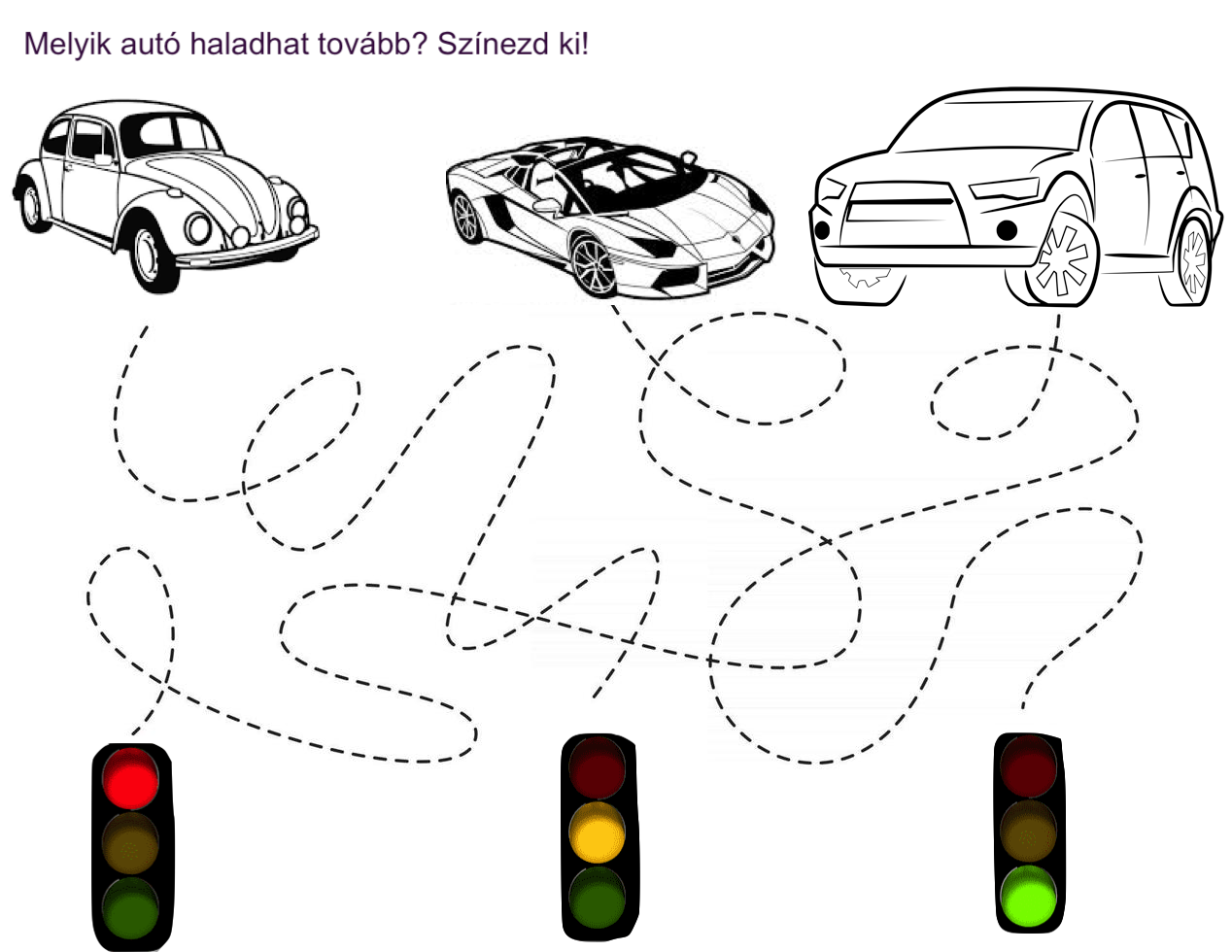
He sits down to play with the colour-matching traffic light game. It’s not easy finding the right place for each colour, but Mrs. Johnson’s help comes in handy.
At the end of the day, Kendall smiles as he waves goodbye. Mrs. Johnson watches with satisfaction as Kendall grows more comfortable with preschool life and hopes tomorrow he’ll play just as happily.
Kendall’s mom is eager to know how his day went.
„What did you play with?” she asks.
„Lots of things,” Kendall replies shortly.
No matter how she tries to coax more details out of him, he won’t say another word. But that’s okay—one day, he just might.
After reading
How many bunnies did you find hiding in the pictures? Here’s a hint: each one has at least one!
Your City (Mrs Johnson’s Questions)
Comprehension and Memory (Leo’s questions)
Emotions and Social Skills (George’s questions)
Problem Solving and Creativity (Blake’s questions)
Lessons and Values (Blossom’s questions)
Imagination and Play (Clara’s questions)
Empathy and Relationships (Willow’s questions)
Adventure and Exploration (Jarvis’s questions)
Logical and Language Skills (Newton’s questions)
Environment and Awareness (Reed’s questions)
Fantasy and Reality (Hannah’s questions)
Experiencing the Story (Kendall’s questions)
Word Exploration
Riddles and Brain Teasers
Pedagogical Reflection
This story is a great example of how to create a supportive atmosphere in a preschool setting and how to help a child adjust to a new environment. From a teacher’s point of view, several key aspects stand out:
Recognising Individual Needs
Kendall’s behaviour—such as clinging to his bus—reflects his need for safety and familiarity. Ms Wright approaches him with empathy, offering choices instead of pressure, for example:
She allows him to keep the bus with him.
She lets him decide where his bus or jumper should be placed.
This personalised approach helps build Kendall’s trust in the preschool environment.
Connecting Play and Learning
The transport-themed activities are a wonderful example of integrated pedagogy. Through the traffic light game, children:
Learn basic traffic rules.
Practise attention and following instructions.
Develop social skills like taking turns and respecting others’ play.
It’s especially meaningful that Kendall, who at first stayed away from the group, eventually joined in—marking an important step in his social integration.
Creating Secure Attachments
The role of the teacher goes far beyond instruction. Both Ms Wright and Mrs Johnson show calm, patient, and supportive attitudes, providing Kendall with emotional security. This is crucial for him to feel safe and to open up to group life.
Understanding Rules Gradually
Kendall’s progress is clearly visible during the day. He is unsure of routines at first (e.g., during lunch), but by snack time, he confidently puts away his plate. This structured environment helps foster independence and understanding of rules.
Using Play to Process Emotions
Kendall’s bus is more than a toy—it’s a transitional object that helps him manage anxiety. When Ms Wright includes the bus in group play, she not only taps into Kendall’s interest but helps him overcome emotional barriers.
Building Social Connections
The story shows how the joy and example of the other children naturally draw Kendall into the group. This gentle inclusion helps lay the foundation for future friendships.
Communication with Parents
Kendall’s mother also plays an important role. The teacher’s open and encouraging communication reassures the parent, helping her feel confident about her child’s wellbeing. The mother’s curiosity is natural, but it’s also the teacher’s role to gently highlight that settling in takes time and that Kendall will share more about his day when he’s ready.
Conclusion
This story serves as a model for how a teacher can support a new child’s integration into the preschool community. It highlights the importance of understanding individual needs, practising empathy, and harnessing the power of playful learning. Kendall’s development shows how a patient, accepting environment and creative, interactive activities are key to building emotional security.
Psychologist’s Perspective
This story reflects the natural developmental and adaptation process of a child entering a new environment, and the crucial role that emotional safety and support play during this period.
Managing Anxiety During Adaptation
Kendall’s attachment to his bus and jumper is a classic example of using transitional objects. These items help children cope with separation from their parent and entering an unfamiliar setting. From a psychological point of view, this type of anxiety is entirely normal. The preschool teacher applied the right strategy by not forcing Kendall to give up the objects, but rather accepting and supporting his needs.
Creating Emotional Security
Ms Wright’s approach—such as allowing Kendall to keep his bus nearby—provides emotional reassurance. Her empathetic communication (e.g., “No one will take your jumper”) helps Kendall gradually develop trust in the preschool setting. This supportive attitude promotes independence over time.
Play as a Therapeutic Tool
The traffic light game is not only educational but also serves as a therapeutic opportunity for Kendall. Including the bus in the group activity allows him to face his anxiety in a safe and engaging way. Interactive play supports emotional release and fosters social development.
Balance Between Attachment and Independence
Kendall’s behaviour—like his firm stance about his jumper—shows that he is able to express his needs. The educators respond to this with respect, which supports Kendall’s emotional development and helps him learn to articulate feelings and boundaries.
Expressing and Regulating Emotions
Kendall’s behaviour—like his firm stance about his jumper—shows that he is able to express his needs. The educators respond to this with respect, which supports Kendall’s emotional development and helps him learn to articulate feelings and boundaries.
Parent Communication and Relationship
At the end of the day, Kendall’s mother’s curiosity is natural. His short replies are also typical for this age, as young children often struggle to recall or share detailed experiences. The teacher’s role is to help parents understand this process and encourage them to be patient.
Processing Fatigue and New Stimuli
Kendall’s tiredness at the end of the day is entirely understandable. A new environment, new rules, and social interactions are intensive experiences for a preschooler. That fatigue is a clear sign of active participation and growth.
Conclusion
From a psychological perspective, this story shows how a child can emotionally and socially adapt to new situations with proper support. The teacher’s empathetic approach and the therapeutic role of play were key for Kendall. The story highlights how children process new situations in different ways, and how a patient, accepting environment fosters trust and independence.
Parent’s Perspective
For a parent, this story may stir up a range of emotions and reflections. Here are a few possible observations and reactions:
Kendall’s Anxiety and Attachment
“It’s clear that Kendall doesn’t yet feel completely secure at preschool. It’s reassuring to see that the teachers don’t push him but allow him to adapt at his own pace.”
“His attachment to the bus reminds me of when my child didn’t want to let go of a favourite toy. It likely helps him feel calm and eases the separation from home.”
The Empathetic Approach of the Preschool Teacher
“I really appreciate how the teachers handle the situation. They don’t take the bus away but reassure Kendall that it will be safe. That shows they respect his feelings.”
“I also value how they try to involve him playfully, like making the bus part of the group activities. That must help him feel less like an outsider.”
Parental Pride in Progress
“It’s lovely to see how much braver Kendall became by the end of the day. That moment when he joined the game and ‘drove’ the bus must have been a big step for him.”
“I’m glad he knew where to put his plate. These little steps show he’s gradually becoming more independent.”
The Value of Community and Play
“I love that the games, like the traffic light activity, are not only fun but educational. It’s comforting to know Kendall is learning about rules and social life in such a setting.”
“Playing together can help him make friends. I hope he’ll start telling us at home who he played with.”
Accepting Brief Answers
“It’s familiar that Kendall doesn’t want to say much about his day. My child often just says, ‘Nothing really.’ It’s important to be patient and not force the conversation.”
“I trust that in time he’ll open up and enjoy sharing what he does at preschool.”
Establishing Long-Term Emotional Security
“I’m grateful that Kendall attends a preschool that pays attention to his emotional needs. It helps him become more confident and independent.”
“It’s important to me that the teachers are so kind and patient as they support him in settling into this new environment.”
Conclusion
For a parent, this story can provide reassurance that the preschool teachers are meeting their child’s emotional needs and supporting their early adjustment. A child’s development—seen in small steps toward independence and openness—can be a source of joy and pride, even if they don’t always talk about it at home. The key is patience and trust that their child is in good hands.
Tale
Emil the Traffic Snail
Once upon a time, in a city much like any other, cars honked, factories puffed smoke, and buildings grew so tall they touched the clouds.
In that city lived Emil, a little snail who had one big dream—he wanted to be a police officer. He collected everything related to the police and, in his dreams, he always wore a police uniform.
One day, he even visited Nero, the German Shepherd police chief, and asked to join the force. But Nero laughed at him.
„Emil, a snail can’t be a police officer! You’re so slow, you’d just get in the way of traffic!”
Emil was heartbroken. He even cried.
His friend Zee, the buzzing fly, saw his tears and felt sorry for him. Zee wanted to help, so he flew to Nero and begged him to let Emil be a police officer—just for one day.
„That’s the silliest thing I’ve ever heard,” grumbled Nero.
„But… it’s his birthday today!” said Zee, even though he didn’t know when Emil’s birthday really was—he just hoped Nero would soften.
„Then bring him a dandelion!” snapped the grumpy police dog.
„Well then, I’ll keep singing until Emil gets to be a police officer!” Zee declared—and began to sing.
Now, Zee might have been a buzzing fly, but he was also a terrible singer. All the dogs at the station covered their ears. Soon, the howling of police dogs echoed through the building.
„Fine, let Emil be a police officer! Just stop singing!” barked Nero.
Zee smiled. Emil was overjoyed when he heard the news. He studied traffic rules all night and showed up bright and early the next day. He proudly put on the police uniform.
But Nero had been right—Emil was very slow. Not only did he cause traffic jams, but he nearly got run over himself. As expected, Nero took away his badge and replaced him with a real police dog.
Emil slithered sadly through the city until he found himself under a bush. There, he spotted a half-empty bottle of dandelion brew. He took a few big sips, then slowly moved on with a heavy heart.
The next day, Zee couldn’t find Emil anywhere. He grew worried and flew to the police station.
„Not now, Zee!” growled Nero. „I’ve got enough problems already! There’s chaos in the city. One of the traffic lights is going haywire, switching colours at random. We still don’t know why!”
Zee flew off, unsure where to search next. He headed downtown. Soon he spotted the traffic light Nero had mentioned. It kept flashing yellow, then red, then green—completely out of order.
As he flew closer, he heard a strange sound coming from inside. Snoring! A very familiar snore…
Meanwhile, traffic was piling up.
„Do something! We can’t drive like this!” a grumpy tabby cat hissed from inside one of the cars to the traffic cop on duty.
Zee saw a team of dogs in work vests approaching from the right. The traffic officer diverted the flow, and the repair crew began dismantling the light.
To everyone’s surprise, they found a sleeping snail inside.
When they woke him, Emil couldn’t even remember how he got in there. It was probably the dandelion brew…
But since that day, Emil has been very happy—because even if just for one day, he really did direct traffic!
Poem, Nursery Rhyme, Song
Stop, look, and listen
before you cross the street.
Use your eyes and use your ears
before you use your feet.

Sometimes there is a traffic light
to help you cross the street.
Be sure to really check that light
before you move your feet.
Lights are sometimes green
and sometimes they are red.
Red’s on top and green’s below.
Stop and look before you go.
A red light means stop
and green means go.
Red on top means STOP!
When green below, you can Go!
Nursery Rhyme to draw a traffic light
Let’s draw a traffic light, tall and bright, Start with a box, straight and right. Make it strong to stand up high, It tells us when to stop or try!
Now comes the magic, circle time— Three little lights in a perfect line. Top is red—stop right there! Middle is yellow—get prepared. Bottom is green—off you go! Follow the light, nice and slow.
Game
The Traffic Signal Game – Benefits for Preschoolers
This playful traffic-themed game offers a range of developmental benefits for preschool-aged children, helping them learn through movement and fun. Here’s why it’s a great choice:
1️⃣ Learning Traffic Rules Through Play
Using red and green light signals helps children understand real-life pedestrian and cyclist situations.
Taking on roles like drivers, pedestrians, and cyclists helps them recognise different traffic scenarios more easily.
The “go back to the start line” rule motivates them to pay attention in a fun and engaging way.
2️⃣ Motor Skills and Coordination
Children practise running, stopping, and changing direction, which enhances their coordination.
Practising directions (right, left, forward, back) helps with spatial awareness.
Avoiding cones while cycling develops fine motor skills and agility.
3️⃣ Focus and Concentration
Kids must pay close attention to signals and respond quickly, sharpening their attention span.
Following rules and timing their movements correctly teaches sustained concentration.
4️⃣ Understanding Rules and Self-Control
Children learn the importance of rules and begin to understand cause and effect.
Practising self-control: stopping at red, going at green, and not running aimlessly.
They begin to realise the importance of watching out for others in shared spaces.
5️⃣ Developing Social Skills
Kids must work together to avoid bumping into one another.
They learn to respect others’ movement — giving way to pedestrians, navigating carefully.
Patience and politeness are practised, just like when waiting for the green light in real life.
6️⃣ Role Play and Experience-Based Learning
Acting out the roles of driver, cyclist, and pedestrian helps children better understand real-life traffic situations.
These hands-on experiences create more lasting knowledge than verbal instruction alone.
7️⃣ Mathematical Thinking and Directional Awareness
Children practise directions (forwards, backwards, left, right).
They can count cones, steps, or timing intervals — boosting logical thinking and number sense.
Summary:
This game strikes a balance between physical development, attention skills, road safety knowledge, and social cooperation. Children learn the basics of traffic through play while developing movement, rule awareness, and teamwork.
Downloads
[integrate_google_drive id=”1″]
Take a good look at the pictures! You can spot 8 differences between the two images! Circle them on the bottom picture!
What Does the Traffic Light Say?
Colour each light on the traffic signal with the correct colour.
Then, draw a line from each coloured light to what you’re allowed to do when that light is on. Can you match them all correctly?

 Fun and Meaningful Stories from Everyday Preschool Life with the Bunny Group






 crescent roll.”


Vélemény, hozzászólás?