Fear of water is more common than many people think. It can range from mild discomfort in deep pools to intense anxiety, panic reactions, or complete avoidance of swimming, lakes, or the sea. Often, this fear is not caused by a lack of physical ability, but by emotional memories stored deep in the nervous system.
This is where Wingwave® coaching can be a powerful and gentle solution.
What Is Wingwave® Coaching?
Wingwave® coaching is a scientifically grounded, short-term coaching method that works with emotional stress, fears, and performance blocks. It combines elements from:
EMDR (Eye Movement Desensitization and Reprocessing)
Neuro-linguistic programming (NLP)
Kinesiology (muscle testing)
The method was developed to help the brain process emotional stress more efficiently—especially stress that the conscious mind already “knows” is irrational, but the body still reacts to automatically.
Why Fear of Water Is Often Emotional (Not Rational)
Many people with water fear say things like:
“I know the water is shallow, but my body panics.”
“I can’t control my breathing once I’m in the pool.”
“I freeze even though I logically know I’m safe.”
This happens because fear of water is often linked to:
A past frightening experience (near-drowning, slipping, being pushed into water)
A childhood memory (even very early, sometimes before verbal memory)
Observed fear (parents, teachers, or siblings expressing anxiety around water)
These memories are stored in the emotional brain (limbic system), not in logical thinking. Wingwave® coaching works exactly at this level.
How Wingwave® Helps with Fear of Water
1. Identifying the Emotional Trigger
Using a gentle muscle test, the coach identifies:
When the fear started
Which specific situation triggers it (deep water, face in water, loss of control, breathing, etc.)
Whether the fear is linked to a specific memory or emotional pattern
This step ensures the coaching is precise and not just “talk-based.”
2. Bilateral Stimulation (Wingwave Process)
The core of Wingwave® is bilateral stimulation, usually through guided eye movements (sometimes tapping or auditory stimuli).
This process:
Activates both brain hemispheres
Mimics natural REM sleep processing
Allows the brain to reprocess emotional memories safely
As a result, the emotional charge connected to water-related memories is reduced or fully neutralized.
3. Emotional Release Without Re-Traumatization
Unlike some methods, Wingwave® does not require reliving the traumatic situation in detail. Clients often report:
Resilience is the ability to stay balanced despite challenges, stress, or setbacks – or to emerge from difficult times even stronger.
It’s not an inborn trait, but a mindset we can develop and train – much like a muscle.
Resilient people don’t have fewer problems – they simply deal with them differently: flexibly, solution-oriented, and in connection with themselves and their surroundings.
The goal of this booklet
This booklet guides you step by step in strengthening your own psychological resilience – along the seven pillars of resilience:
Acceptance, Optimism, Solution Orientation, Self-Efficacy, Network Orientation, Future Planning & Sense of Purpose, and Self-Regulation.
Each pillar represents a vital competence that helps you:
handle stress more effectively,
respond more consciously to your thoughts and emotions,
and cultivate lasting calm and joy in your life.
How to use this booklet
Read the chapters in order, or intuitively choose the topic that speaks to you most right now.
Take your time with each exercise – even ten minutes can make a difference.
Record your thoughts, feelings, and insights in the booklet or a personal journal.
Repeat your favorite practices regularly – that’s how they become part of your everyday life.
This is not a test, but an invitation to meet yourself.
With every step, your confidence will grow – as will your ability to live with more calm, courage, and vitality.
The 7 Pillars of Resilience
Acceptance – I accept what I cannot change.
Optimism – I believe in a positive future.
Solution Orientation – I focus on what I can do.
Self-Efficacy – I take responsibility and trust in my actions.
Network Orientation – I reach out for support when I need it.
Future Planning & Sense of Purpose – I set goals that give my life meaning.
Self-Regulation – I take care of my thoughts, feelings, and energy.
1. Acceptance – I Acknowledge What I Cannot Change
Acceptance means recognizing that some things are beyond your control — and letting go of the struggle against them.
Instead of fighting reality, you allow the moment to be what it is.
Acceptance brings inner peace and frees your energy for what truly matters.
What’s in My Control?
Goal: To become aware of where your energy goes — and to consciously redirect it toward what you can truly influence.
Step: Connect with yourself Take a few deep breaths. Think of a situation that currently causes you stress or worry — maybe something at work, in your studies, relationships, or health.
Draw two columns:
Left column: “I can influence this.”
Right column: “This is beyond my control.”
Then answer these guided reflection questions:
For the left column – what you can influence:
What decisions can I personally make in this situation?
What habits, thoughts, or attitudes can I change?
Who can I reach out to for support?
What small, concrete step could I take today toward a solution?
For the right column – what’s beyond my control:
What is out of my hands, no matter how much I wish it were different?
Which things depend on other people’s choices or actions?
What circumstances are completely external to me?
What would happen if I allowed myself to let go of these?
Step: Reflect
Look at your two lists and ask yourself:
Where is my focus right now — on the left or the right?
How would my daily energy change if I spent 80% of it on the left side?
What’s the very first thing I can do today from my “influence” list?
If you’re a visual person, draw an energy circle 🎯 — write what you can control inside the circle, and place everything you can’t control outside of it. That’s your personal “Circle of Control.”
Letting-Go Meditation
Letting go does not mean giving up — it means freeing yourself from what you cannot control, so you can focus your energy on what truly matters.
This short meditation helps calm your nervous system, soften tension, and create emotional clarity.
How to practice the Letting-Go Meditation:
Take 5 quiet minutes for yourself.
Sit comfortably, close your eyes, and breathe slowly in and out.
With every exhale, say silently in your mind: “I release what I cannot change.”
Let this phrase wash gently through you.
With every breath out, imagine releasing a little more tension – worries, expectations, pressure, or mental clutter.
Why it works:
Pairing your breath with a calming inner mantra activates the parasympathetic nervous system, helping your body switch into a state of rest and recovery.
Your mind becomes clearer, your emotions soften, and your body relaxes.
Use this meditation in the morning to start fresh or in the evening to unwind.
Try practicing for a few days in a row and notice how your inner landscape slowly becomes calmer and lighter.
Stone Ritual
Hold a small stone and think of something that has been weighing on you.
Then place it down deliberately — as a symbol of release.
Reality Check
When you catch yourself worrying, pause and ask:
“Is this really true?”
You’ll often realize that stress comes from interpretation, not facts.
Grant me the serenity to accept the things I cannot change,
the courage to change the things I can,
and the wisdom to know the difference.
2. Optimism – I Believe in a Positive Future
Optimism is not about ignoring problems. It’s about choosing to focus on hope, learning, and possibilities.
When you see challenges as opportunities to grow, you stay motivated and creative — even in difficult times.
Three Good Things
Our brain has a built-in negativity bias – it remembers what went wrong more vividly than what went well.
But the good news is: you can re-train it to focus differently.
How it works:
Every evening, write down three things that went well today.
They don’t have to be big achievements –
maybe a friendly smile, a meaningful conversation,
a small success at work, or simply a beautiful thought that crossed your mind.
You can use a small notebook or your phone – the key is consistency, even on difficult days.
Why it works:
Over time, your brain learns to notice positive moments more quickly.
This exercise builds optimism, improves sleep, and enhances your overall sense of well-being.
Pair it with a calming ritual – a cup of tea, a soft playlist, or candlelight – so you end your day on a peaceful and grateful note.
What Can I Learn?
Challenges are an inevitable part of life.
But how we choose to respond determines whether we stay stuck — or grow stronger.
This exercise transforms difficult moments into opportunities for learning and personal development.
How it works
After you’ve experienced a difficult, uncomfortable, or emotionally charged situation, gently ask yourself:
“What did I learn from this?”
Take a moment to reflect honestly, without self-judgment. Then write down:
Which strength did this situation reveal in you?
What insight or realisation did you gain?
What new boundary, skill, or awareness emerged because of it?
These notes don’t have to be perfect or profound — the purpose is simply to help your mind shift from “Why did this happen to me?” to “How can this help me grow?”
Why it works
This simple reflective practice helps you:
reframe challenges as part of your growth,
recognise your inner resources,
reduce rumination,
and strengthen your long-term resilience.
Every time you identify a learning, your brain builds a new association: “Difficulty = Growth potential.”
Over time, setbacks feel less like failures and more like steps on your path.
Keep a small “Growth Journal.”
After each challenging moment, write one or two sentences beginning with:
“This taught me that…”
“Next time, I’ll try…”
“I discovered that I can…”
Looking back weeks or months later becomes a powerful reminder of how far you’ve come.
Reframing
When a negative thought appears (“I’ll never manage this”), reframe it to:
“I’m learning how to handle this.”
Gratitude Journal
Note one thing you’re thankful for each day.
Focusing on gratitude shifts attention from what’s missing to what’s abundant.
3. Solution Orientation – I Focus on What I Can Do
Instead of asking “Why did this happen?”, solution-oriented people ask,
“What can I do now?”
This mindset keeps you proactive, creative, and capable of finding the next small step forward.
The First Step
When facing a problem, we often see only the size of the challenge — and feel stuck.
But resilience isn’t about having all the answers.
It’s about recognizing the next step forward.
How it works:
When you’re in a difficult situation, ask yourself:
“What can I do next, concretely?”
You don’t need to see the whole path or final goal.
Just focus on the very first step.
Why it works:
Focusing on the next step makes things more manageable and reduces stress.
It helps you regain a sense of control and builds self-efficacy — one of the core pillars of resilience.
Write down your first step.
Once you’ve taken it, ask yourself again:
“What’s the next one now?”
Step by step, you’ll move forward — even on the days that feel heavy.
Unfiltered Brainstorm
When we struggle to find solutions, it’s rarely because we lack ideas —
but because our inner critic blocks them before they can even appear:
“That won’t work.”
“That’s unrealistic.”
“That’s too simple.”
“That’s stupid.”
Creativity can only unfold when evaluation and fear take a short break.
How to practice it
Set a timer for 10 minutes.
Write down every idea that comes to mind — no matter how small, big, wild, or strange.
Absolutely no judging:
no crossing out
no editing
no filtering
no explaining
no “that won’t work” thoughts
Just let ideas flow freely.
When the time is up, then you can look at your list and see which ideas are promising, creative, practical, or inspiring.
Why it works
This exercise helps you:
bypass your inner critic
unlock creative and intuitive thinking
reduce fear of failure
shift from perfectionism to possibility
discover new solutions you wouldn’t normally consider
It strengthens resilience by training mental flexibility and openness — two essential skills for problem-solving.
Use this method whenever you’re stuck on a decision, starting a new project, or feeling blocked.
Sometimes one “crazy” idea becomes the key to clarity, motivation, or the next breakthrough.
Solution Map
Draw your problem in the center and sketch all possible paths around it.
Seeing options visually reduces the feeling of being stuck.
Best-Case Scenario
Imagine your challenge resolved in the best possible way.
What did you do to get there?
Now turn those insights into actionable steps.
SMART Goal Setting
Turn your wish into a concrete plan:
Specific: What exactly do I want to do?
Measurable: How will I know I’m making progress?
Achievable: Is this realistic right now?
Relevant: Why is it meaningful for me?
Time-bound: By when will I achieve it?
Big changes begin with small, consistent steps.
4. Self-Efficacy – I Trust My Own Power to Act
Self-efficacy means believing that your actions make a difference.
It’s the opposite of helplessness.
You build it through small, consistent successes — not by waiting for confidence to appear.
Success Journal
Self-efficacy means believing in your own ability to make things happen.
Yet in everyday life, we often overlook our small wins – especially when we’re stressed, tired, or unsure of ourselves.
How it works:
Every evening, write down three things that went well or that you accomplished today.
They don’t have to be big achievements – even small moments count:
a clear conversation, a brave decision, a kind gesture, a thought you turned into action.
Use a small notebook or your notes app – what matters most is consistency.
You’re training your brain to notice progress and competence more consciously.
Why it works:
Over time, you’ll start to see more clearly what you already do well.
You’ll build trust in your own abilities – and strengthen your self-confidence, day by day.
At the end of each week, take a moment to read through your notes.
You’ll be surprised how much you’ve actually accomplished – even on days that felt like a struggle.
I Can Because…
List five situations you handled well and write why you succeeded.
This reminds you of your strengths and resources.
Skill Check
Name three things you’re good at — at work or in life — and use them intentionally this week.
Resilience Reflection
Think back to a hard time you overcame.
What helped you then? What can you apply again now?
Set an Independent Goal
Choose one small goal that depends only on you — a workout, a phone call, an organized space.
Every completed action strengthens your self-trust.
Resource Anchor
Pick a gesture, word, or small object that reminds you of your strength.
Practice linking it with a memory of calm or confidence.
Then use it in moments of stress to reconnect with that feeling.
Courage Check
Remember a moment when you acted even though you were afraid.
What were you afraid of?
What actually happened?
What did you gain from that courage?
Write your own courage mantra, such as:
“I don’t need to be perfect to be brave.”
“Courage begins where comfort ends.”
5. Network Orientation – I Reach Out and Stay Connected
Resilience grows in connection.
Strong relationships act like a safety net — they catch us when we fall and lift us when we need energy.
Support Network Map
Resilience doesn’t mean doing everything alone.
In fact, people with strong and caring connections recover faster from stress, setbacks, and crises.
How it works:
Draw a simple network diagram:
In the center, write your own name.
Around you, note the people you can rely on in different situations – family, friends, colleagues, mentors, neighbors, or even online communities.
Add a few words describing how each person supports you:
Do they listen? Offer advice? Bring laughter or structure into your day?
Why it works:
This exercise helps you realize that you’re not alone –
and it also highlights where your strongest connections are,
and where new ones might still grow.
Review your support network from time to time.
Ask yourself: Who gives me strength right now?
Who might need my support in return?
Resilience is built together, not in isolation.
Reconnect
Contact three people you haven’t spoken to in a while — a message, a call, a coffee.
Small gestures keep bonds alive.
Gratitude Message
Thank someone who recently supported or inspired you.
Expressed appreciation strengthens both sides.
Buddy System
Find a “resilience buddy” — someone with similar goals.
Meet weekly, share progress, and set one small goal for the next week.
Encourage and celebrate each other.
Build Your Digital Network
Keep your online presence authentic and active.
Update your profile, reach out to new people, join groups that inspire you, and interact with kindness.
Networking isn’t about collecting contacts — it’s about creating meaningful exchange.
When we grow together, we grow stronger.
6. Future Planning & Sense of Purpose – I Know My Why
Purpose gives direction and motivation, especially in uncertain times.
When you know what truly matters to you, decisions become easier and energy flows more freely.
Vision Board
Future orientation means having a clear sense of where you want to go — professionally, personally, and emotionally.
A Vision Board helps you make that direction visible, tangible, and motivating.
How it works:
Create a collage using images, words, colors, or symbols that represent your goals and dreams for the next 1–5 years.
You can use magazine clippings, a digital canvas, or draw elements yourself — anything that feels inspiring.
Reflect on questions like:
What do I want to achieve in my career?
What kind of personal life do I want to build?
Which feelings do I want more of in my everyday life?
What new skills, qualities, or relationships would I like to develop?
Why it works:
Visualization activates your brain in a powerful way.
When you keep your dreams in sight, you’re more likely to take small, steady steps toward them.
It aligns your inner compass with what truly matters to you.
Place your Vision Board somewhere visible — above your desk, on your wardrobe door, or as your digital wallpaper.
Update it once a year and celebrate the goals you’ve already reached.
Mini Mission Statement
Write one powerful sentence that defines what you stand for and what drives you.
Examples:
“I help others believe in themselves.”
“I bring structure and heart together.”
“I stand for clarity, courage, and movement.”
My Core Values
List your five most important values (e.g. honesty, creativity, freedom, learning, connection).
Next to each, write one way you can live that value daily.
Life Line
Draw a line showing your life’s path — with highs, lows, and turning points.
Mark what each phase taught you.
You’ll see that even difficult times shaped your strength.
Letter to My Future Self
Write to yourself one year from now.
Describe where you want to be, how you want to feel, and what you hope to have learned.
Read it later — you’ll be amazed at your growth.
Future Wheel
Reflect on your ideal work life:
Where do I work?
What do I do?
Who do I work with?
How do I feel?
What values guide me? Your answers show what kind of environment truly suits you.
Find Meaning Through Action
Purpose often comes from doing, not thinking.
Volunteer, mentor, create — and notice what makes you feel alive.
Even small contributions can bring big meaning.
Finding Meaning Through Volunteering
Contributing to something bigger than yourself gives life purpose and energy.
Volunteering helps you feel useful, connected, and empowered — three key elements of resilience.
Even small acts of service can strengthen your sense of meaning and self-worth.
Try This
Reflect: What matters most to you? Think about causes or communities that touch your heart — the environment, education, animals, social justice, inclusion, or culture. Your volunteer work should match your personal values.
Start small. Look for one concrete way to get involved — online or locally:
Join a neighborhood or community project
Offer mentoring or tutoring
Help organize a cleanup or donation drive
Support a school, elderly center, or charity association
Even a few hours a month can make a difference.
Notice what you gain. Ask yourself:
What skills do I use or develop while helping?
Who do I meet or connect with?
How do I feel afterwards?
Make it part of your life. Think about how you can keep volunteering sustainably — through regular small actions, monthly events, or spontaneous help.
Reflection
When do I feel truly useful?
What does my engagement have to do with my “why”?
What do I learn about myself when I help others?
Meaning is often found not through thinking — but through doing.
Try something new, observe how it feels, and let yourself be surprised by the impact you can create.
Find your rhythm. Track your progress. Fall in love with learning.
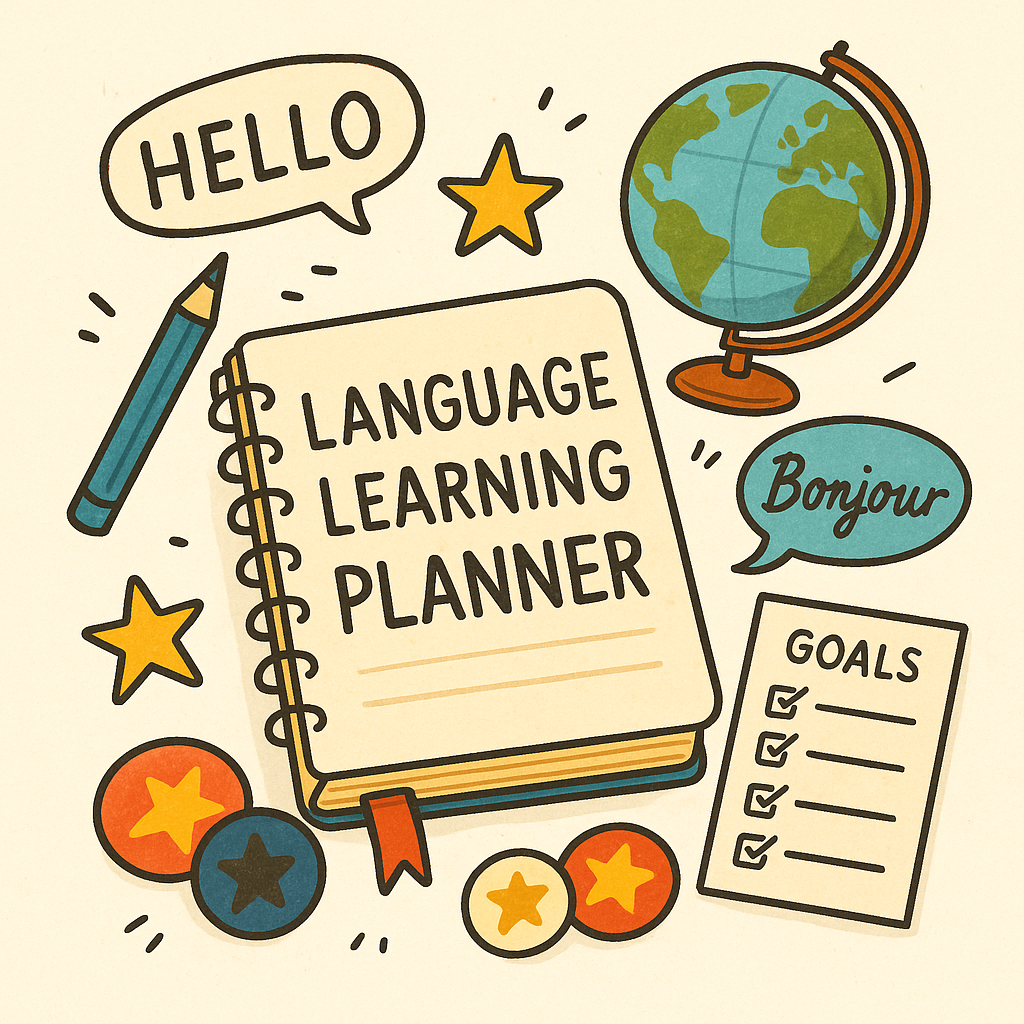
Why You Need a Language Planner
Learning a new language is not just about memorizing words — it’s about building a relationship with the language. Most learners struggle not because they lack motivation, but because they lack structure. A Language Learning Planner gives your study routine shape, direction, and purpose.
It helps you:
clarify why you’re learning,
define what to focus on,
and track how far you’ve come.
Whether you’re learning alone, with a teacher, or through an app, this planner turns scattered practice into a clear learning journey.
Who Is It For?
This planner is for anyone who wants to learn smarter, not harder. It works beautifully for:
Independent learners — who need accountability and structure.
Language teachers & coaches — who want to guide students through goal-setting.
Students & exam-takers — preparing for language tests or study abroad.
Travellers & expats — who want to feel more confident in daily situations.
Lifelong learners — who see language as a way to grow personally and culturally.
How to Use It Step by Step
Start with Motivation
Before jumping into grammar, take time to reflect. Ask yourself: Why do I want to learn this language? Fill out the Motivation & Identity pages — these questions will ground your “why” and remind you of it later when energy fades.
This section only needs to be filled out once (but you can revisit it anytime).
Map Out Your Priorities
Use the Learning Priorities section to list the most relevant topics and skills for your life — travel, work, food, daily routines, etc. It helps you decide what’s urgent versus what’s nice to have.
Write your priorities on small sticky notes and rearrange them as your focus changes.
Turn Priorities into SMART Goals
Use the SMART Goal Builder to transform your ideas into clear, achievable targets. Each goal includes:
your motivation,
measurable outcome,
start and end date,
obstacles and resources,
and an action plan.
This is a great page to print out separately and keep visible — on your desk, mirror, or inside your notebook. (You can reuse this template for every new goal — one per skill or topic.)
Build Habits That Stick
Small, consistent steps beat long study marathons.
That’s where the Habit Tracker comes in.
Choose 4–6 habits, and mark how often you want to do each one (daily, 2x/week, weekly, monthly).
Creative ideas:
Use color codes for each skill: 🟢 Listening, 🔵 Speaking, 🟣 Writing, 🟠 Reading.
Add stickers or stars for completed weeks — visual motivation works wonders!
If you prefer old-school style, simply rate yourself with grades or percentages.
The Monthly Habit Tracker is also best printed — so you can fill it in by hand and actually see your progress grow.
Reflect Weekly
Every week, fill in your Weekly Reflection page:
“What did I learn?”
“What was hard?”
“What made me proud?”
These mini check-ins help you celebrate small wins and adjust what’s not working. Think of them as your language diary, not just a form.
Review Monthly
At the end of each month, complete your Monthly Review and Milestone Map.
You’ll start seeing patterns — which skills you practiced most, which still need love, and how your confidence grows.
Give yourself a monthly badge or title – like “Grammar Explorer”, “Pronunciation Hero”, or “Fearless Speaker.”
A playful reward system keeps the process light and fun.
What to Print and What to Keep Digital
Section
Recommended Format
Frequency
Motivation & Identity
Fill once in PDF
One-time setup
Learning Priorities
Fill once or update digitally
Every few months
SMART Goal Builder
Print for each new goal
Monthly or per topic
Habit Tracker
Print monthly
1 per month
Weekly Reflection
Digital or print (your choice)
Monthly
Monthly Review & Milestone Map
Print for long-term overview
Monthly or quarterly
Final Thought
Your Language Learning Planner is not just a document — it’s your travel companion on the road to fluency. Some days you’ll fill it neatly, other days you’ll just doodle a word or star — and that’s perfectly fine.
Consistency matters more than perfection. Celebrate each page you fill, each word you write, and each box you tick. Because every mark is proof that you’re learning, growing, and connecting.
When you’re between jobs, it’s easy to feel like you’re stuck in limbo — waiting, refreshing job boards, tweaking your resume for the 47th time. But what if there were a way to keep growing, even before your next job offer?
Enter: Volunteering.
It’s not just about giving back — it’s a way to move forward.
Here are 7 powerful reasons why volunteering while job hunting might be the smartest move you can make:
1. Learn by doing
Volunteering gives you hands-on experience — especially valuable if you’re a recent graduate, career changer, or returning to the workforce. It allows you to build real skills in real environments, not just on paper.
2. Practice the language
If you’ve relocated to a new country or are improving your language skills, volunteering is a low-pressure way to practice. You gain confidence, fluency, and cultural awareness — all while doing something meaningful.
3. Build real connections
Volunteering puts you in touch with professionals who share your values. These authentic connections often turn into lasting networks — and sometimes even job leads — without the awkwardness of forced networking events.
4. Explore your path
Not sure if you’re heading in the right direction? Volunteering lets you test different roles or fields before fully committing. Think of it as career prototyping — try first, decide later.
5. Fill the gap with purpose
Recruiters notice when you’ve used your time well. A volunteer role shows you’re active, curious, and committed — even when you’re not officially employed. It fills gaps with value, not just time.
6. Boost your mental health
Job searching can be draining. Volunteering offers structure, purpose, and community, all of which support your mental well-being. Helping others is a powerful way to regain perspective and stay grounded.
7. It might lead to a job
Yes, really. Many organizations hire from within their volunteer base, because those people have already shown initiative, commitment, and cultural fit. Several volunteers I’ve coached were hired this way — no application needed.
Volunteering = Growth
Volunteering isn’t just about giving your time — it’s about investing in your future self. It helps you stay sharp, stay visible, and stay motivated.
Have you volunteered while job hunting?
What did you learn — or gain — from the experience?
Share your thoughts with me! And if you’re not sure where to start, reach out. I’m happy to connect you with ideas or platforms.
Volunteering Options
Imagine – Online If you’re someone who believes in meaningful work, human potential, and the power of giving back — volunteering as a career coach or mentor at Imagine might be one of the most rewarding steps you can take.
Imagine – Online
If you’re someone who believes in meaningful work, human potential, and the power of giving back — volunteering as a career coach or mentor at Imagine might be one of the most rewarding steps you can take.
Who is it for?
Experienced professionals
If you’ve spent years navigating the job market, leading teams, or growing in your career — your perspective is invaluable. You can offer insights that no textbook or webinar can match.
HR, recruiting, and coaching professionals
Your practical knowledge of CV reviews, interviews, and hiring trends could be life-changing for someone trying to break into the European job market.
Career changers or new coaches
Volunteering at Imagine is a great way to gain real-world coaching experience, test your skills, and build confidence in a low-pressure, high-impact setting.
Expats and multilingual professionals
If you’ve successfully adapted to a new culture, job market, or language — you already have hard-won knowledge others are searching for. You’ve walked the path they’re just beginning.
Why become a mentor?
1. Make a real impact — fast.
Imagine works with job seekers (“Fellows”) who are highly motivated and often facing systemic barriers to employment. Your guidance could be the breakthrough they need.
2. One session makes a difference.
Even a single 30-minute conversation — giving feedback on a CV or LinkedIn profile — can open up a new perspective or opportunity.
3. Grow your coaching skills.
You’ll learn to coach across cultures, languages, and backgrounds — while practicing deep listening, empathy, and structured feedback.
4. Join a purpose-driven global community.
Imagine isn’t just a platform — it’s a network of values-aligned people who believe in inclusion, dignity, and helping others rise.
5. It feels good.
Supporting someone’s growth, confidence, or job search momentum is not just “nice” — it’s energizing, humbling, and deeply fulfilling.
A few things to know:
You choose your level of involvement (even one session is helpful)
All coaching happens online
Imagine supports mentors with structure and optional training
No long-term commitment required — but many choose to stay
United Planet – Virtual Volunteering & Internships Make global impact from wherever you are. United Planet offers virtual volunteering and internship programs that connect people across borders to collaborate on real-world projects that make a difference. Whether you’re a student, young professional, or seasoned expert — this is a unique chance to apply your skills meaningfully, develop professionally, and support community-based organizations around the world.
United Planet – Virtual Volunteering & Internships
Make global impact from wherever you are.
United Planet offers virtual volunteering and internship programs that connect people across borders to collaborate on real-world projects that make a difference. Whether you’re a student, young professional, or seasoned expert — this is a unique chance to apply your skills meaningfully, develop professionally, and support community-based organizations around the world.
Who is it for?
United Planet is a great fit for:
Students looking for international experience or credit-bearing internships
Young professionals seeking career clarity, skill-building, or a global network
Career changers or retirees who want to contribute expertise to global challenges
Anyone passionate about social impact, global citizenship, and intercultural exchange
Why join as a virtual volunteer?
Gain international experience without travel costs or visa hurdles
Build your resume while supporting education, health, sustainability, or youth initiatives
Collaborate with global NGOs and community projects
Flexible time commitment — you choose the intensity and duration
Personalized matching based on your skills, interests, and goals
Communications, content creation, and social media
Fundraising and project development
Marketing, research, translation
Organizational support for NGOs and schools
Why United Planet?
With 20+ years of experience and partnerships in 30+ countries, United Planet is recognized for responsible volunteering, deep cultural engagement, and personalized support.
You’ll not only make a difference — you’ll also gain insight, confidence, and a stronger global mindset.Choose fully remote, flexible opportunities
ReDI School – Germany By volunteering with ReDI, you’ll help people break through barriers and build futures through tech.
ReDI School Germany – Volunteer with Purpose in Tech Education
Empower through education. Create opportunity through code.
ReDI School of Digital Integration is a nonprofit tech school in Germany that connects refugees, migrants, and underserved communities with free digital education and strong career networks — and they’re powered by an incredible community of volunteers.
By volunteering with ReDI, you’ll help people break through barriers and build futures through tech.
Who is it for?
ReDI is a perfect fit for:
Tech professionals & developers who want to share their skills for social good
Mentors & coaches who enjoy guiding and uplifting others
Students or career changers looking to gain hands-on experience while contributing
Anyone passionate about inclusion, diversity, and education in tech
Why volunteer with ReDI?
Make a direct impact by helping students gain tech skills, confidence, and job-readiness
Join an international, values-driven community that believes in empowerment through education
Improve your teaching, mentoring, and communication skills
Build meaningful relationships with students, teachers, and industry professionals
Enhance your CV with purpose-driven experience in a respected European nonprofit
Give back using what you already know — no teaching degree required
Volunteer roles include:
Teaching coding, UX/UI design, data science, or digital skills
Mentoring students one-on-one
Supporting career readiness & mock interviews
Helping with community-building events and workshops
ReDI offers flexible options — you can volunteer in person in Germany (Berlin, Munich, etc.) or remotely for certain programs.
Discover Volunteer Opportunities in Munich
Visit the Münchner FreiwilligenMesse (Munich Volunteer Fair)
Are you living in or near Munich and thinking about volunteering?
Looking for meaningful ways to give back, grow your skills, or connect with your community?
Then the Münchner FreiwilligenMesse is the place to be.
Next event:
🗓 March 15, 2026
Altes und Neues Rathaus, Marienplatz, Munich
Who should attend?
Anyone curious about volunteering — from one-time actions to long-term engagement
Newcomers looking to integrate and contribute in Munich
Students and career changers seeking purpose-driven experience
Retirees or professionals with time and skills to share
Creative, tech, or admin-savvy individuals wanting to support local causes
Why it’s worth visiting:
Get matched with an opportunity that fits your time, skills, and interests
Meet over 50 local organizations and initiatives looking for volunteers
Discover a wide range of causes: education, environment, culture, social work, health, and more
Attend talks, info sessions, and hands-on activities
Many children learning to swim wear nose clips or full-face goggles that cover the nose. At first glance, these seem helpful — they prevent water from entering the nose, making submersion more comfortable. But are they really supporting learning? Or are they delaying a key part of water adaptation: learning to exhale through the nose?
Let me share the story of one of my students.
A Brave Step Forward — With a Simple Pair of Goggles
Today I worked with an 8-year-old beginner. She was afraid to put her nose in the water. It was clear this wasn’t just hesitation — most likely, a previous negative experience had left a lasting impression. There’s no time during a swim lesson to fully unpack a child’s past, but we can move forward gently, step by step.
During today’s session, for the first time, she dipped her nose into the water and managed to exhale slowly through it. She kept her eyes open and focused — reading the number I showed her with my fingers under the water. She was wearing standard goggles that left her nose uncovered. And it worked.
She was cautious, but in control.
When Equipment Becomes a Crutch
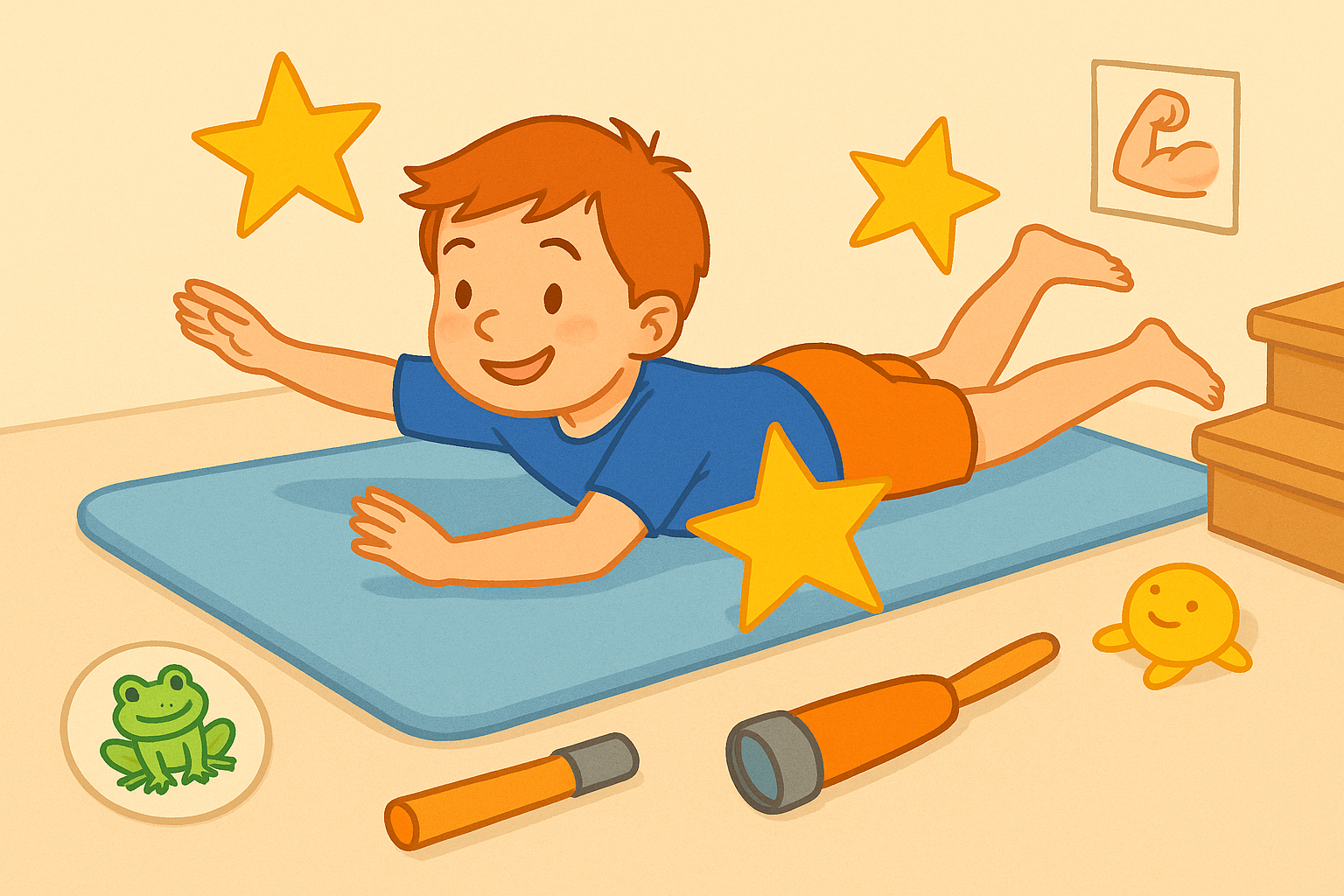
Later, we switched to a game: drop the rubber octopus toy deeper into the pool so it floats up in a zig-zag. The deeper the drop, the more fun. For this, she switched to her full-face goggles — the kind that cover the nose entirely. She held the mask tightly with one hand to prevent water from leaking in, while trying to release the toy with the other.
At one point, the mask shifted.
Water rushed in, and she surfaced coughing, panicked and struggling to catch her breath.
She knows how to exhale through her nose now. She can stay calm. But because the mask had taught her to ignore her nose — to rely on it being sealed — she didn’t use the new reflex. In that moment of surprise, she panicked. Her instinct was still to inhale through the nose.
And that’s exactly the problem.
Why This Matters
As long as a child wears a nose clip or a mask that covers the nose, they never have to learn the most basic aquatic reflex: only exhale through the nose underwater.
With a standard goggle, the child can only submerge as long as they can confidently exhale — and that’s a good thing. They remain connected to their body and breath. They build awareness, control, and trust.
But full-face masks remove that self-regulation.
They teach the child not to pay attention to their nose at all.
So what happens when they fall in the water unexpectedly — even just into the shallow end — and they’re not wearing the mask or nose clip?
Panic. Inhalation. And a very real risk of water being aspirated into the lungs.
My Advice
If your child is learning to swim:
Start without a nose clip or nose-covering mask. Let them develop a natural breathing rhythm.
Celebrate small steps. Just dipping the nose in and blowing bubbles is progress.
Practice gently and regularly. Over time, the fear fades and the reflexes grow.
Use goggles that leave the nose uncovered. So your child can build the ability to manage nose breathing on their own.
Swimming is not just about strokes — it’s about body awareness, breath control, and calm confidence. Let’s give children the chance to develop those skills, starting with the nose.
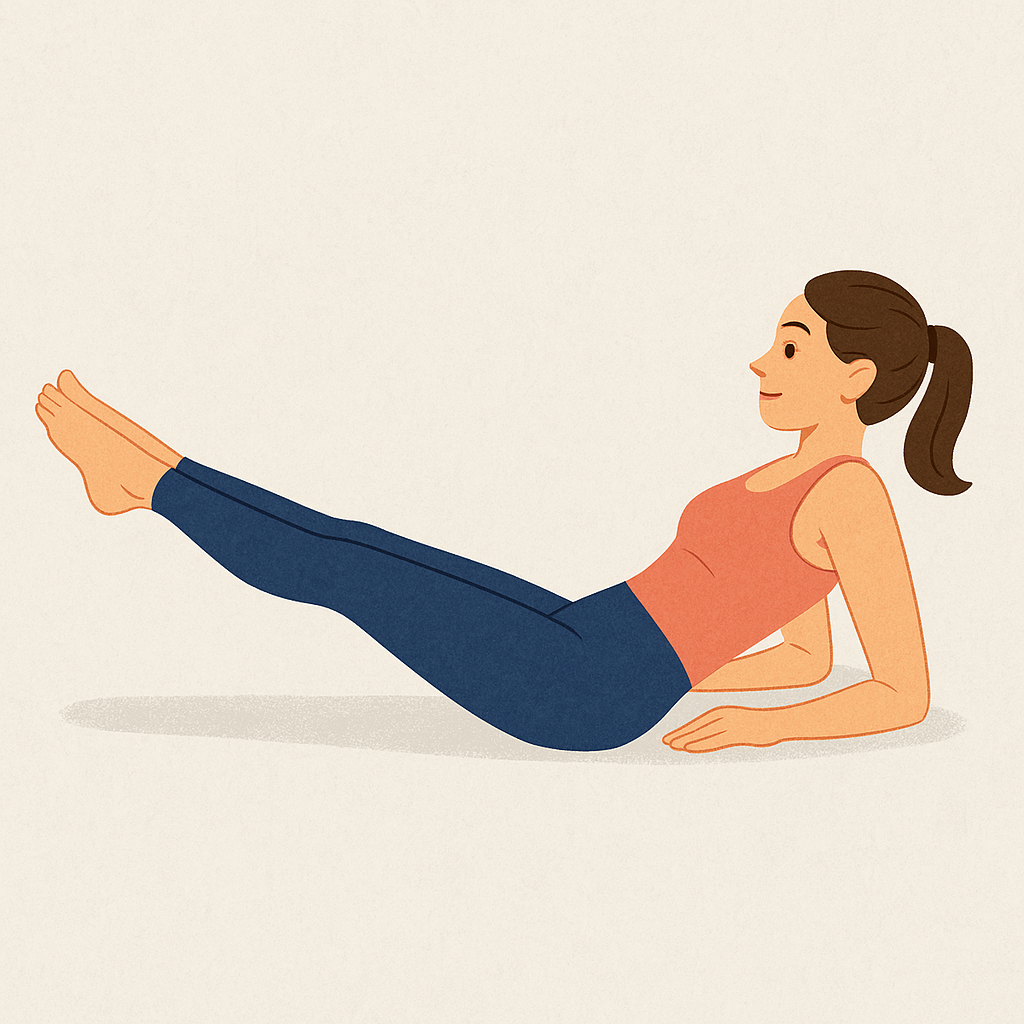
In this episode, we break down the breaststroke kick into clear, beginner-friendly steps you can practice on land — with or without water access.
You’ll learn:
How to position your body for optimal leg movement
What each stage of the kick should look and feel like
The rhythm and coordination that lead to smooth swimming
Whether you’re a swim coach, a parent, or a beginner swimmer, this guided session gives you all the cues and corrections you need to build muscle memory outside the pool.
Perfect for dryland prep before swim lessons
Also ideal for kids who need extra practice in a safe, supportive setting
🎬 Directed by: Elizabeth Chai Vasarhelyi, Jimmy Chin
One Woman. One Goal. 100 Miles Across Open Sea
Nyad is the true story of Diana Nyad – a woman in her sixties who decides to swim from Cuba to Florida, facing sharks, jellyfish, sleep deprivation, and brutal waves.
This isn’t about winning – it’s about endurance, starting over, and pushing past personal limits.
A Film You Don’t Just Watch – You Feel
Beyond the emotional depth and the beautiful friendship (especially with Jodie Foster’s character), this film is a true gift to swimmers.
Special highlight:
Annette Bening, playing Diana Nyad, swims with breathtaking technique – not just cinematically, but also with technical precision.
Her strokes, head position, and breathing rhythm – every movement is technically exemplary.
This is no movie magic: Bening underwent months of intense swim training to authentically portray the legendary athlete.
Who Is This Film For?
Swimming lovers seeking inspiring examples
Beginners who want to improve their technique
Women of all ages pursuing new goals
Anyone who appreciates deep, human stories
Final Thought
NYAD isn’t a sports film. It’s a human story.
About how sometimes it’s not about victory – but about stepping into the water and not giving up.
Watch it. Then go swim.
Swim Technique Analysis
What can we learn from Annette Bening’s portrayal of Diana Nyad?
Throughout the film, we see extended swim sequences – from the side and underwater, offering great opportunities for swimmers and coaches to study form and flow.
Strengths
1. Head & Body Position
Bening’s head remains neutral, in line with the spine. Her gaze is downward or slightly forward – ideal for hydrodynamics and stability.
Especially in open water, this kind of alignment helps with direction and energy efficiency.
2. Breathing Technique
She breathes in a 2- or 3-stroke rhythm, turning the head to the side without lifting it fully out of the water.
Perfect for beginners to observe: this kind of breathing doesn’t break body rotation and preserves her streamline.
3. Arm Stroke
Her stroke shows elements of the “high elbow catch” – especially during the underwater pull. First the hand, then the elbow leads – a core element of effective freestyle.
Her recovery is smooth, with no slapping – crucial for long-distance swimming.
3. Arm Stroke
Her stroke shows elements of the “high elbow catch” – especially during the underwater pull. First the hand, then the elbow leads – a core element of effective freestyle.
Her recovery is smooth, with no slapping – crucial for long-distance swimming.
4. Core Rotation & Arm-Leg Coordination
Her shoulders rotate with each pulling arm, while the legs remain minimal but rhythmic.
This is textbook core-driven freestyle – not too much kicking, but every motion is connected.
What We Can Learn
It’s not about power – it’s about coordination.
Breathing, stroke, and alignment create efficient and sustainable movement.
Visual control (head turning, line awareness) is vital even in open water – for beginners and pros alike.
Summary
If you’re learning freestyle – or teaching it – NYAD is the perfect visual reference for natural, effective technique.
Pro tip: Watch the movie with a swimmer’s eye – and write down what you notice about Diana’s movements!
Life Lessons from NYAD
This is more than a sports story – it’s a deeply human journey full of life lessons that reach far beyond the pool.
1. You’re Never Too Old for Your Dreams
At 64, Diana Nyad returned to the goal she hadn’t reached in her youth.
The film reminds us: age is not a limit – it’s a mindset.
Persistence isn’t about muscle – it’s about mental resolve.
“Your body may age, but your passion doesn’t.”
2. Success Isn’t Linear – Failure Is Part of the Journey
Nyad attempted the Cuba–Florida swim five times – and only succeeded on the sixth.
Each attempt taught her something. The real victory was the quality of the journey, not just the finish line.
A failed swim ≠ a failed person.
3. Even the Greatest Achievements Are Shared
The friendship between Bonnie (Jodie Foster) and Diana is one of the film’s most touching threads.
No matter how strong you are, you can’t do it alone. You need someone who believes in you even when you don’t.
Friendship is the greatest safety net in life’s stormy waters.
4. Persistence Doesn’t Mean You’re Not Afraid – It Means You Keep Going Despite Fear
Diana wasn’t fearless. But she didn’t let sharks, jellyfish, or the unknown paralyze her.
Courage isn’t the absence of fear – it’s movement in spite of it.
5. The True Goal Isn’t to Impress Others – It’s to Be True to Yourself
Nyad didn’t seek fame. She sought inner certainty: “I can do this.”
This film shows an almost meditative journey of self-truth:
You’re not aiming to win – you’re aiming to stay honest with yourself.
Conclusion
NYAD teaches us that:
it’s never too late to begin again
the path to your dreams is tough
but in the end, who you become matters more than what you achieve
Everything You Need to Begin Your Swimming Journey
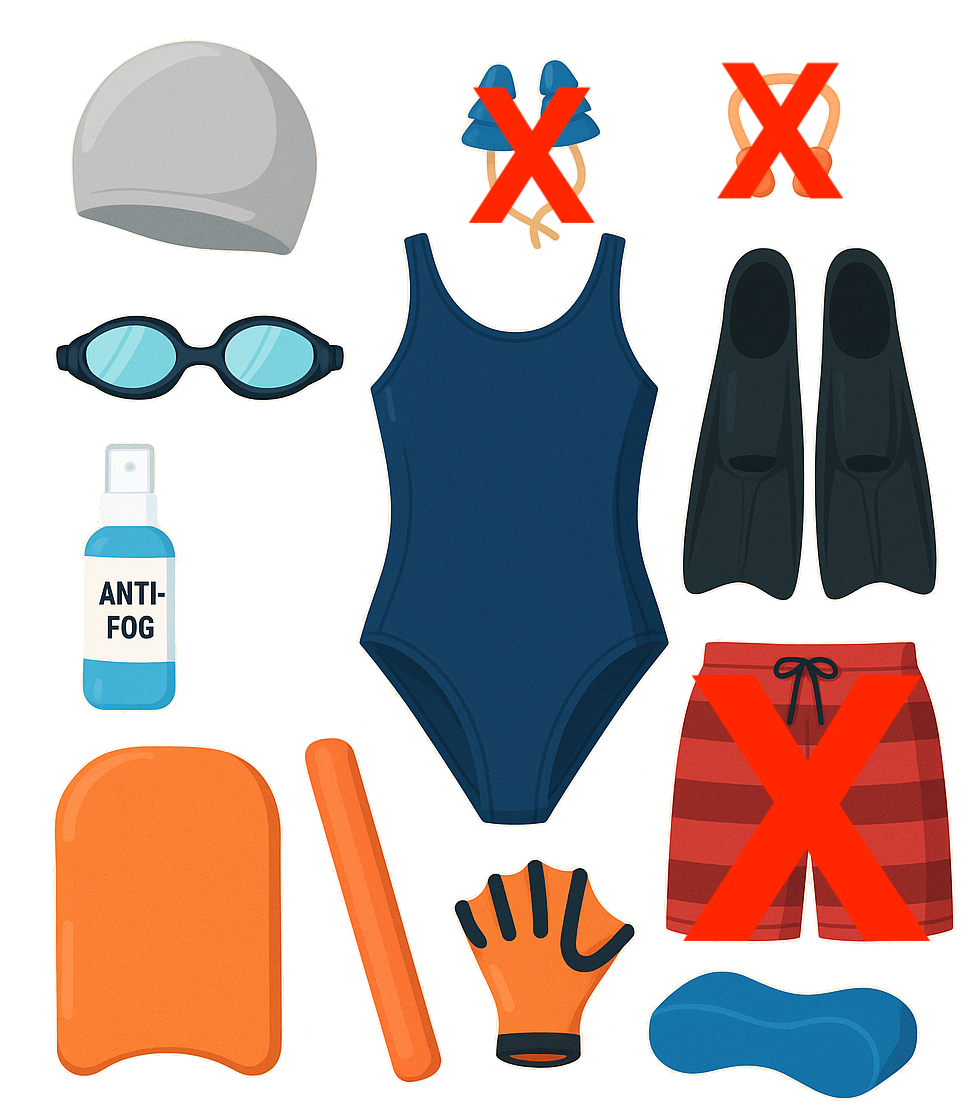
Whether you’re just starting out or returning to the pool after a long break, the right gear can make all the difference. From safety and comfort to efficiency and enjoyment, here’s your complete Starter Kit for Swimming — suitable for kids and adults alike.
If you don’t want to read it, watch any of the videos below.
If you’re prone to muscle cramps, especially in the calves, it’s a good idea to take a fast-absorbing magnesium supplement before your swim lesson (such as a liquid shot or effervescent tablet).
Cold water, combined with the relative stillness of early swim drills, can easily trigger cramps — particularly during beginner classes. Magnesium helps prevent cramping and supports smoother, more enjoyable movement in the water.
A swim cap isn’t just for long-haired swimmers — it’s essential for anyone whose wet hair might fall into their face while swimming, regardless of gender.
For long hair, a silicone swim cap is highly recommended as it offers a tighter seal and keeps your hair dry.
Latex caps are thinner and lighter but less durable and not ideal for longer hair.
Benefits:
Keeps hair out of your eyes
Reduces drag
Keeps the pool cleaner
Helps maintain body temperature in cold water
Product Recommendations
Silicone Swimming Cap with Comfort Fit – For Dreadlocks, Braids & Afro – Waterproof & Comfortable
Even if you’re already comfortable opening your eyes underwater, swimming goggles are a must for focused learning and long practice sessions.
They protect your eyes from chlorine and help you stay oriented underwater.
For indoor lessons, goggles with clear lenses are recommended so the instructor can see where you’re looking — especially important when learning head and eye coordination.
For outdoor swimming, prioritise UV protection to shield your eyes from the sun’s glare.
Don’t forget:
Use an anti-fog spray regularly to keep your goggles clear.
Adjust the straps for a snug but comfortable fit — no raccoon eyes needed!
Eye Drops
Dry eyes after swimming are a common issue – especially in chlorinated pools or when swimming without goggles.
🔹 If your eyes feel dry, tight, or irritated after practice, it can affect your long-term eye health.
🔹 That’s why it’s highly recommended to carry a hydrating eye drop and use it immediately after swimming – particularly if you’ve been underwater without goggles.
Avoid loose flaps, heavy panels, or decorative elements (zippers, skirts, etc.) that might drag in the water or disrupt your form.
Long-sleeved or long-legged suits can add warmth and sun protection — just make sure they fit tightly enough to stay streamlined. I recommend ones with front zip.
For kids, suits should feel comfortable yet secure during all kinds of motion — no shifting or sagging.
Wetsuits (Neoprene suits) may be used occasionally, especially in colder water.
Important note: Wetsuit (Neoprene) increases buoyancy — which can lead to frustration when switching back to regular swimwear, especially for kids. Teach children that floating without help takes time and practice.
For Women:
One-piece swimsuits are highly recommended — never wear a bikini during training.
Product Recommendations
Quick-Drying, Sporty Swimsuit Made of MaxLife Eco Fabric with Maximum Chlorine Resistance and UPF 50+ UV Protection
Only recommended if the swimmer has specific ear problems (e.g., recurring infections). In that case, choose plugs that still allow you to hear the instructor.
Learning to exhale through the nose underwater is an essential swimming skill that helps prevent water from entering the sinuses and supports relaxed, rhythmic breathing.
Optional Add-Ons for Practice and Progression
During the classes, it should be provided by the teacher. Buy them just for your own training.
Equipment
Recommended for
Purpose
Neopren Swim gloves
Intermediate & advanced (from B1 level)
Increase resistance for stronger upper body workouts
Kickboard
All beginners
Helps develop correct body position and safe breathing
Noodle
Young children
Builds water confidence and body awareness
Short Fins
Beginners & advanced
Learn proper kicking technique or refine arm movement
Foam Swimming Buoy
Intermediate & advanced (from B1 level)
Corrects body position and strengthens arms by isolating the upper body
Product Recommendations
Waterproof Swimming Gloves with Adjustable Carrying Strap
Flip-flops , slippers for hygiene at poolside and in the shower
Water bottle to stay hydrated during lessons
Logbook or app to track progress over time
Waterproof label stickers to name-tag your gear (especially useful for kids!)
Final Thoughts
Investing in the right starter kit helps you learn faster, feel more confident, and enjoy swimming more. Equip yourself — or your child — with the basics and make every swim session safe, fun, and productive.