Kategória: EN

Posts in English

  • Movie Recommendation: NYAD

    Movie Recommendation: NYAD

    The Story of Swimming Without Limits

    📺 Available on Netflix

    🕒 Runtime: 2 hours 1 minute

    🎭 Starring: Annette Bening, Jodie Foster

    🎬 Directed by: Elizabeth Chai Vasarhelyi, Jimmy Chin

    One Woman. One Goal. 100 Miles Across Open Sea

    Nyad is the true story of Diana Nyad – a woman in her sixties who decides to swim from Cuba to Florida, facing sharks, jellyfish, sleep deprivation, and brutal waves.

    This isn’t about winning – it’s about endurance, starting over, and pushing past personal limits.

    A Film You Don’t Just Watch – You Feel

    Beyond the emotional depth and the beautiful friendship (especially with Jodie Foster’s character), this film is a true gift to swimmers.

    Special highlight:

    Annette Bening, playing Diana Nyad, swims with breathtaking technique – not just cinematically, but also with technical precision.

    Her strokes, head position, and breathing rhythm – every movement is technically exemplary.

    This is no movie magic: Bening underwent months of intense swim training to authentically portray the legendary athlete.

    Who Is This Film For?

    • Swimming lovers seeking inspiring examples
    • Beginners who want to improve their technique
    • Women of all ages pursuing new goals
    • Anyone who appreciates deep, human stories

    Final Thought

    NYAD isn’t a sports film. It’s a human story.

    About how sometimes it’s not about victory – but about stepping into the water and not giving up.

    Watch it. Then go swim.

    Swim Technique Analysis

    What can we learn from Annette Bening’s portrayal of Diana Nyad?

    Throughout the film, we see extended swim sequences – from the side and underwater, offering great opportunities for swimmers and coaches to study form and flow.

    Strengths

    1. Head & Body Position

    Bening’s head remains neutral, in line with the spine. Her gaze is downward or slightly forward – ideal for hydrodynamics and stability.

    Especially in open water, this kind of alignment helps with direction and energy efficiency.

    2. Breathing Technique

    She breathes in a 2- or 3-stroke rhythm, turning the head to the side without lifting it fully out of the water.

    Perfect for beginners to observe: this kind of breathing doesn’t break body rotation and preserves her streamline.

    3. Arm Stroke

    Her stroke shows elements of the “high elbow catch” – especially during the underwater pull. First the hand, then the elbow leads – a core element of effective freestyle.

    Her recovery is smooth, with no slapping – crucial for long-distance swimming.

    3. Arm Stroke

    Her stroke shows elements of the “high elbow catch” – especially during the underwater pull. First the hand, then the elbow leads – a core element of effective freestyle.

    Her recovery is smooth, with no slapping – crucial for long-distance swimming.

    4. Core Rotation & Arm-Leg Coordination

    Her shoulders rotate with each pulling arm, while the legs remain minimal but rhythmic.

    This is textbook core-driven freestyle – not too much kicking, but every motion is connected.

    What We Can Learn

    • It’s not about power – it’s about coordination.
    • Breathing, stroke, and alignment create efficient and sustainable movement.
    • Visual control (head turning, line awareness) is vital even in open water – for beginners and pros alike.

    Summary

    If you’re learning freestyle – or teaching it – NYAD is the perfect visual reference for natural, effective technique.

    Pro tip: Watch the movie with a swimmer’s eye – and write down what you notice about Diana’s movements!

    Life Lessons from NYAD

    This is more than a sports story – it’s a deeply human journey full of life lessons that reach far beyond the pool.

    1. You’re Never Too Old for Your Dreams

    At 64, Diana Nyad returned to the goal she hadn’t reached in her youth.

    The film reminds us: age is not a limit – it’s a mindset.

    Persistence isn’t about muscle – it’s about mental resolve.

    “Your body may age, but your passion doesn’t.”

    2. Success Isn’t Linear – Failure Is Part of the Journey

    Nyad attempted the Cuba–Florida swim five times – and only succeeded on the sixth.

    Each attempt taught her something. The real victory was the quality of the journey, not just the finish line.

    A failed swim ≠ a failed person.

    3. Even the Greatest Achievements Are Shared

    The friendship between Bonnie (Jodie Foster) and Diana is one of the film’s most touching threads.

    No matter how strong you are, you can’t do it alone. You need someone who believes in you even when you don’t.

    Friendship is the greatest safety net in life’s stormy waters.

    4. Persistence Doesn’t Mean You’re Not Afraid – It Means You Keep Going Despite Fear

    Diana wasn’t fearless. But she didn’t let sharks, jellyfish, or the unknown paralyze her.

    Courage isn’t the absence of fear – it’s movement in spite of it.

    5. The True Goal Isn’t to Impress Others – It’s to Be True to Yourself

    Nyad didn’t seek fame. She sought inner certainty: “I can do this.”

    This film shows an almost meditative journey of self-truth:

    You’re not aiming to win – you’re aiming to stay honest with yourself.

    Conclusion

    NYAD teaches us that:

    • it’s never too late to begin again
    • the path to your dreams is tough
    • but in the end, who you become matters more than what you achieve

  • Starter Kit for Swimming

    Starter Kit for Swimming

    Everything You Need to Begin Your Swimming Journey

    Whether you’re just starting out or returning to the pool after a long break, the right gear can make all the difference. From safety and comfort to efficiency and enjoyment, here’s your complete Starter Kit for Swimming — suitable for kids and adults alike.

    If you don’t want to read it, watch any of the videos below.

    Preventing Muscle Cramps

    If you’re prone to muscle cramps, especially in the calves, it’s a good idea to take a fast-absorbing magnesium supplement before your swim lesson (such as a liquid shot or effervescent tablet).

    Cold water, combined with the relative stillness of early swim drills, can easily trigger cramps — particularly during beginner classes. Magnesium helps prevent cramping and supports smoother, more enjoyable movement in the water.

    Product Recommendations

    Magnesium Powder

    Swim Cap

    A swim cap isn’t just for long-haired swimmers — it’s essential for anyone whose wet hair might fall into their face while swimming, regardless of gender.

    • For long hair, a silicone swim cap is highly recommended as it offers a tighter seal and keeps your hair dry.
    • Latex caps are thinner and lighter but less durable and not ideal for longer hair.

    Benefits:

    • Keeps hair out of your eyes
    • Reduces drag
    • Keeps the pool cleaner
    • Helps maintain body temperature in cold water
    Product Recommendations

    Silicone Swimming Cap with Comfort Fit – For Dreadlocks, Braids & Afro – Waterproof & Comfortable

    Silicone Swimming Caps for Long Hair, Healthy and Warm

    Swimming Cap for Children 6-14 Years Silicone & Waterproof

    Swim Goggles

    Even if you’re already comfortable opening your eyes underwater, swimming goggles are a must for focused learning and long practice sessions.

    They protect your eyes from chlorine and help you stay oriented underwater.

    For indoor lessons, goggles with clear lenses are recommended so the instructor can see where you’re looking — especially important when learning head and eye coordination.

    For outdoor swimming, prioritise UV protection to shield your eyes from the sun’s glare.

    Don’t forget:

    • Use an anti-fog spray regularly to keep your goggles clear.
    • Adjust the straps for a snug but comfortable fit — no raccoon eyes needed!

    Eye Drops

    Dry eyes after swimming are a common issue – especially in chlorinated pools or when swimming without goggles.

    🔹 If your eyes feel dry, tight, or irritated after practice, it can affect your long-term eye health.

    🔹 That’s why it’s highly recommended to carry a hydrating eye drop and use it immediately after swimming – particularly if you’ve been underwater without goggles.

    Product Recommendations

    Clear glasses

    UV protection, anti-fog, extra comfortable diving goggles with case, perfect swimming with clear vision for men and women

    Crystal Clear® Swim Dive – Effective Sustainable Anti Fog Spray

    Swimwear

    Material matters:

    • Select quick-drying, lightweight fabrics.
    • Avoid loose flaps, heavy panels, or decorative elements (zippers, skirts, etc.) that might drag in the water or disrupt your form.
    • Long-sleeved or long-legged suits can add warmth and sun protection — just make sure they fit tightly enough to stay streamlined. I recommend ones with front zip.
    • For kids, suits should feel comfortable yet secure during all kinds of motion — no shifting or sagging.
    • Wetsuits (Neoprene suits) may be used occasionally, especially in colder water.

    Important note: Wetsuit (Neoprene) increases buoyancy — which can lead to frustration when switching back to regular swimwear, especially for kids. Teach children that floating without help takes time and practice.

    For Women:

    • One-piece swimsuits are highly recommended — never wear a bikini during training.
    Product Recommendations

    Quick-Drying, Sporty Swimsuit Made of MaxLife Eco Fabric with Maximum Chlorine Resistance and UPF 50+ UV Protection

    Women’s Full Body Swimsuit One Piece Zip Front UPF 50+ Long Sleeve Diving Swimsuit for Snorkelling

    Skirt with Integrated Inner Briefs. Quick-drying. Lace Crochet – no drag

    For Men:

    • Choose tight-fitting swim briefs or jammers for unrestricted movement.
    Product Recommendations

    classic swimming swim trunks

    Jammer

    Swim Briefs

    Ear and Nose Accessories

    Earplugs:

    Only recommended if the swimmer has specific ear problems (e.g., recurring infections). In that case, choose plugs that still allow you to hear the instructor.

    Read more:

    Nose Clips:

    ❌ Not recommended.

    Learning to exhale through the nose underwater is an essential swimming skill that helps prevent water from entering the sinuses and supports relaxed, rhythmic breathing.

    Optional Add-Ons for Practice and Progression

    During the classes, it should be provided by the teacher. Buy them just for your own training.

    EquipmentRecommended forPurpose
    Neopren Swim glovesIntermediate & advanced (from B1 level)Increase resistance for stronger upper body workouts
    KickboardAll beginnersHelps develop correct body position and safe breathing
    NoodleYoung childrenBuilds water confidence and body awareness
    Short FinsBeginners & advancedLearn proper kicking technique or refine arm movement
    Foam Swimming BuoyIntermediate & advanced (from B1 level)Corrects body position and strengthens arms by isolating the upper body
    Product Recommendations

    Waterproof Swimming Gloves with Adjustable Carrying Strap

    Kickboard for Children and Adults Training

    Short training fins for swimming

    Foam Swimming Buoy

    Bonus Tips & Ideas to Include

    • Mesh swim bag to carry wet gear home
    • Towel or bathrobe for warmth between sessions
    • Flip-flops , slippers for hygiene at poolside and in the shower
    • Water bottle to stay hydrated during lessons
    • Logbook or app to track progress over time
    • Waterproof label stickers to name-tag your gear (especially useful for kids!)

    Final Thoughts

    Investing in the right starter kit helps you learn faster, feel more confident, and enjoy swimming more. Equip yourself — or your child — with the basics and make every swim session safe, fun, and productive.

  • Dryland Swim Prep Missions for Kids – 3 Playful At-Home Routines

    Dryland Swim Prep Missions for Kids – 3 Playful At-Home Routines

    Dry, indoor swimming preparation and support exercises are especially beneficial for children because they:

    • support learning through repetition,
    • develop body awareness, coordination, and muscle strength,
    • allow practice in a safe environment,
    • and playfully prepare the body for aquatic movement.

    Breaststroke on Dry Land

    Goal: Reinforce the sequence and coordination of the breaststroke movements.

    Exercises:

    “Dry Frog” – Lie on the stomach on a mat or carpet.

    Arms stretch forward, then pull back (imagine “clapping” in front).

    Legs bend and then close heels together – say together: “Open – pull – close – glide!”

    Frog Memory – Draw or show images of the movements separately.

    Shuffle and ask the child to place them in the correct order.

    Mirror Moves – Stand facing each other. You demonstrate the stroke, and your child mirrors you like a reflection.

    Game:

    Frog Dice – Roll a die.

    Each number represents a move:

    1 – arms, 2 – legs, 3 – glide, etc.

    Repeat the movement shown.

    Freestyle Kick & Body Position

    Goal: Rhythmic leg movement, core engagement, straight body alignment.

    Exercises:

    “Rocket Launchpad” – Lie flat on the back on a mat. Arms stretched forward, legs slightly lifted.

    Perform quick flutter kicks.

    Say: “Fly to the stars – don’t let your feet touch down!”

    Kick on a Ball – If you have a large fitness ball, lie on it belly-down and kick legs in the air.

    “Frozen Feet” – Imagine feet are stuck in ice – kick quickly to free them without moving the upper body.

    Game:

    Kick Rhythm to Music – Play music and let the legs kick to the rhythm.

    Alternate between slow, fast, and pause – like real freestyle!

    Coordination, Body Awareness & Strength

    Goal: Basic movement control, core strength, limb coordination.

    Exercises:

    “Superhero Hold” – Lie on the stomach, lift arms and legs at the same time.

    Hold for 3–5 seconds – excellent for core strength.

    “Bridge” – Lie on the back, feet flat, and lift hips upward.

    Strengthens hips and thighs – important for water stability.

    Air Steps – Lie on the back and “walk” in the air with high knees, as if climbing stairs.

    Builds rhythm and balance.

    Game:

    Target Touch – Stick colorful dots or plush toys to the wall or floor.

    Say: “Touch the green one with your left foot!” or “Right hand!”

    This boosts body part awareness.

    Tip for Parents

    Create a Swim Journal or Mission Booklet where your child can tick off each dryland task after completion.

    Use fun icons like: 🌊 🐸 🚀 💪

  • Frog Legs & Rocket Legs – Swimming Movements Through Play

    Frog Legs & Rocket Legs – Swimming Movements Through Play

    Breaststroke Practice

    Arms and Legs Practiced Separately – the Playful Way

    Goal: Raise awareness of arm and leg strokes, practice separating the movements.

    Frog Leg Game (Legs only)

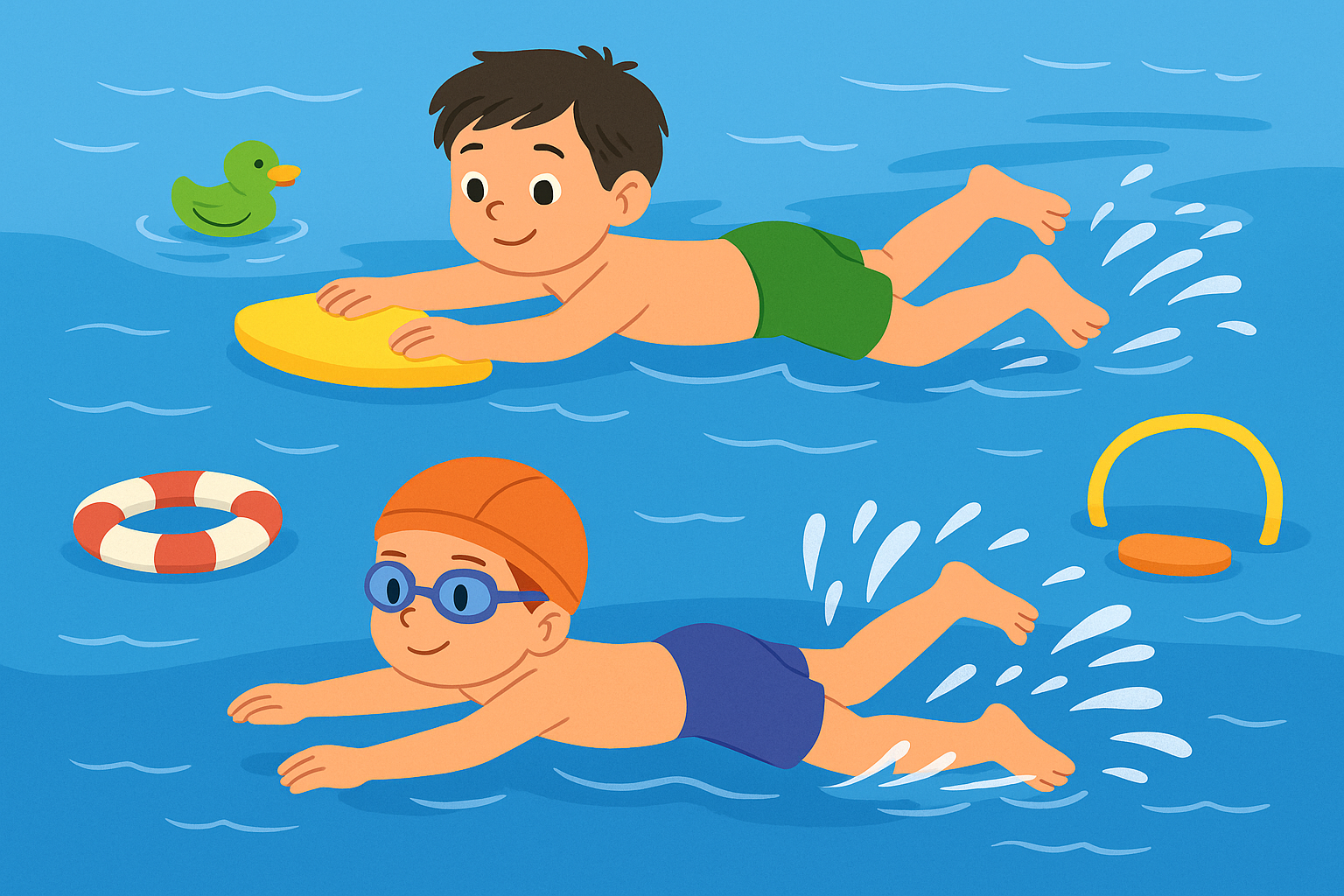
    Lying on the stomach in the water, supported by a kickboard or noodle.

    Only the legs move – “like a frog escaping from a fisherman.”

    You can say: “Frog legs! Close your heels! Push back!”

    Clapping Arms (Arms only)

    Lying on the stomach, legs are “sleeping.”

    Arms move in a circular motion and clap together in front.

    You can say: “Open – pull – close – glide!”

    Breaststroke Races

    Swim alternately: first legs only, then arms only, then full strokes (depending on ability).

    You can add playful timing or race with floating toys:

    “Who gets there first – You or the crocodile?”

    Full Breaststroke & Direction Changes

    “Robot Frog”

    Each movement follows a verbal cue: “Arms – Legs – Glide!”

    Can be done with music – e.g., move on claps.

    Lane Switch Game

    Swim from one side to the other while avoiding obstacles (e.g., floating toys).

    Say: “Now you’re a scuba frog – glide silently through!”

    Animal Race

    Example: “Frog vs. Duck” – swim in different styles: slow, fast, splashy, elegant.

    Swim to Target

    Swim to a toy and return while holding it under the arm – helps with direction control.

    Goal: Coordinate arms and legs; prepare for proper breathing technique.

    Freestyle Kick – Playful Coordination Practice

    Powerful Kicks & Proper Body Position

    Goal: Develop straight body alignment, rhythmic kicks, water awareness

    Rocket Race

    Kick in prone position on the board or with arms extended.

    Say: “Who flies to space faster?”

    “Hot Water” Game

    The goal is to keep the legs from dropping – or the “hot water” will burn!

    This encourages core tension and body position.

    Snake Slalom

    Place toys or rings on the water. The child kicks between them without moving them.

    Fountain Contest

    Who can make the biggest splash? From a sitting or lying position.

    You can score it: “1 point for a small wave, 3 points for a big splash!”

  • Water Adventure to Help Children Fall in Love with Swimming

    Water Adventure to Help Children Fall in Love with Swimming

    This activity plan is ideal for children aged 3 to 6, especially those who are still getting familiar with the water or need a safe, play-based introduction to swimming.

    It can also be easily adapted for children on the autism spectrum or with sensory sensitivities, as it is structured, repeatable, and can be done with a parent.

    Getting Comfortable in Water & Balance

    Goal:

    Building a sense of safety, body awareness, floating, and coordination.

    Equipment:

    • watering can or small bucket
    • small rubber toy (e.g. animal figure)
    • kickboard or noodle

    Activities:

    • Water pouring game – The child pours water on you, then you pour water on them. (Avoid the face unless they ask!)
    • Splashing – From a squat, let them slap the water with their hands. Great for activating low-tone arms.
    • Supported floating – Hold them on their back with their head on your shoulder, legs floating. You can narrate: “You’re riding on a cloud…”
    • Toy fishing – Throw a floating toy and let them bring it back like a puppy.
    • Stepping under water – Walk through shallow water with high knees. Say: “You’re a dinosaur now!”

    Breathing & Face Immersion

    Goal:

    Preparing for submersion, nasal exhalation, and building water confidence.

    Equipment:

    • small cup or watering can
    • bubble wand (optional)
    • small ball or floating toy

    Activities:

    • Bubble blowing – Blow bubbles outside the water, then in, using mouth or straw (like a motor sound).
    • “Hair washing” game – Gently pour water over each other’s heads like in the shower. Say: “Shampoo, shampoo, rinse!”
    • Face dip with toy kiss – “Kiss” a toy under water (only if the child agrees).
    • Ball blowing – Blow a small ball across the surface like wind.
    • Developing skill: “Fish kiss” – Forehead into the water, hold for a few seconds (count from 1 to 3 together).

    Gliding & Leg Movements

    Goal:

    Body alignment, floating position, leg propulsion – pre-swimming mechanics.

    Equipment:

    • kickboard or noodle
    • floating target (e.g. hoop)

    Activities:

    • Water circling – You hold them while they pedal their legs in a circle like a helicopter.
    • Rocket glide – Child stretches arms forward on a kickboard, and you gently push from behind. Say: “3, 2, 1… blast off!”
    • Kicking with support – They hold the board and kick while you support their hips.
    • Sitting leg splashes – Sit on the pool edge and splash water with feet. Compete: “Who makes the biggest splash?”
    • Toy grab – Glide forward and “catch” a floating toy mid-glide.

    Diving & Object Retrieval

    Goal:

    Building courage to dive, hand-eye coordination, controlled breathing.

    Equipment:

    • sinking toys
    • swim goggles (if the child likes them)
    • hoop or floating marker

    Activities:

    • Bubble countdown – Count from 5 to 1 as they blow bubbles into the water, gradually for longer each time.
    • Treasure hunt in shallow water – Drop toys and let them pick them up (initially only submerging to mouth level).
    • “Hidden fish” game – Hide a toy near the pool wall; they must find it.
    • Head dip – You count, they try to “hide” under the water for a moment.
    • Swim through the hoop – Dive or glide through an underwater hoop (if not ready yet, play above the surface).
  • Pose on the Shore, Power in the Pool – Freestyle – The Catch and Finish Connection

    Pose on the Shore, Power in the Pool – Freestyle – The Catch and Finish Connection

    Discover how power flows from the catch to the finish — and how your core coordinates both actions.

    In this episode, you’ll explore:

    • How the catch initiates power
    • How the finish completes the momentum
    • How your core links both in perfect harmony

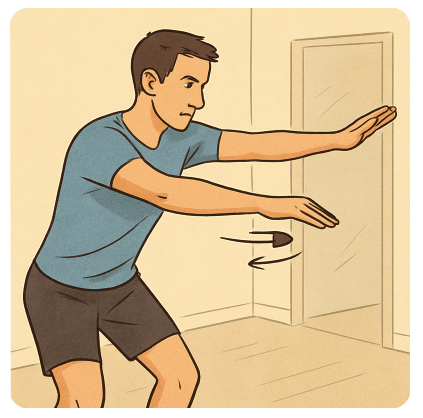
    🏡 Try it at home: This dryland drill only requires a bit of space and body awareness.

    🌊 Learn to synchronize pull and push — for a smoother, stronger freestyle stroke.

  • Pose on the Shore, Power in the Pool – Freestyle – Core-Powered Coordination

    Pose on the Shore, Power in the Pool – Freestyle – Core-Powered Coordination

    🔗 Discover how your center connects everything — for smoother, stronger swimming.

    In this episode of Stretch by the Shore, Strength in the Swim, we dive into the hidden hero of freestyle: core coordination.

    Your arms and legs are powerful — but without a stable, active center, they can’t work together efficiently.

    🌀 You’ll explore:

    • How to link limbs and core for full-body flow

    • Why coordinated movement is more important than muscle strength alone

    • A practical home drill to activate your center while simulating swim motion

    🏡 No pool needed – just your body and your breath.

    🎧 Tune in to build strength from the inside out — and feel your freestyle transform.

  • Pose on the Shore, Power in the Pool – Freestyle – Stay on Your Axis

    Pose on the Shore, Power in the Pool – Freestyle – Stay on Your Axis

    🧭 Find your inner line – for more stability, efficiency, and power in freestyle swimming.

    In this episode of Stretch by the Shore, Strength in the Swim, you’ll explore how to sense and control your body’s alignment — even without water!

    Through simple at-home exercises in front of a mirror, you’ll discover how posture and axis awareness impact your stroke.

    You’ll learn:

    • Why a stable axis makes your freestyle stronger and more energy-efficient

    • How to move forward with minimal effort and maximum glide

    • A mirror drill to help you steer your body like a balanced boat

    🏡 No equipment needed – perfect for practicing at home.

    🎧 Tune in now and stay on course!

  • Why It’s Important to Shake Water Out of Your Ears After Diving

    Why It’s Important to Shake Water Out of Your Ears After Diving

    Getting water stuck in your ears after swimming or diving is common — and while it may seem harmless, it’s important to remove it to avoid discomfort and even infections.

    What Happens If the Water Stays Inside?

    When water remains trapped in the ear canal, it creates a warm and moist environment, perfect for bacteria to grow. This can lead to otitis externa, commonly known as “swimmer’s ear.” Symptoms include itching, pain, discharge, or even temporary hearing loss.

    Risks of Trapped Water:

    • Ear canal inflammation
    • Feeling of blockage
    • Temporary hearing loss
    • Bacterial or fungal infections

    How to Shake Water Out of Your Ear

    The goal is to use gravity and motion to encourage the water to escape naturally. Here are a few safe and effective techniques:

    1. Head Tilt + Bouncing

    • Tilt your head to the side with the affected ear facing down.
    • Gently hop on one foot (the same side as the blocked ear) or bounce lightly up and down.
    • Gravity and motion will help the water drain out.

    2. Palm Vacuum Method

    • Tilt your head sideways.
    • Place the palm of your hand over the affected ear and press gently to create suction.
    • Quickly remove your hand to generate a slight vacuum — this may pull the water out.

    3. Lie Down & Wait

    • Lie on your side with the blocked ear down.
    • Stay in this position for a few minutes to allow the water to slowly trickle out on its own.

    My Personal Favourite: Warm Pad for the Ear

    Sometimes, water gets so deep into my ear that even the classic jumping techniques don’t help. That’s when I reach for my secret weapon: warmth!

    At home, I love using a cherry pit pillow – I heat it up in the microwave and gently place it against my ear. The warmth relaxes the tissues, stimulates circulation, and often helps the water drain naturally. Plus, it feels soothing and comforting.

    📸 (Yes, I even took a picture of myself doing it — because it happens to me too, especially when I’m demonstrating what not to do during lessons, and the water sneaks in deep.)

    🚗 On the go? No problem. When I don’t have my pillow with me, I use snap-activated hand warmers. These little pocket-sized heat packs activate instantly and offer a perfect quick fix.

    What Not to Do

    • Avoid inserting objects into your ear, like cotton swabs. These can push the water deeper or cause injury.
    • Don’t use ear drops if you suspect a perforated eardrum.

    Prevention Tips

    • Use swim earplugs if you’re prone to water getting stuck.
    • Consider using over-the-counter drying ear drops after swimming (check for safety if you have ear issues).

    When is it a good idea to use custom earplugs?

    • If you have sensitive ears or frequent ear infections: Earplugs can help prevent water from entering the ear canal.
    • During open water swimming or races: You don’t need to hear instructions here, and earplugs protect from cold water and bacteria.
    • For prolonged underwater activities: Like diving, where special pressure-equalizing plugs can protect your eardrum.
    • If you’re simply uncomfortable with water in your ears: For comfort and peace of mind.

    When should earplugs not be used?

    • During swimming lessons or courses: Hearing the instructor is crucial for both safety and learning.
    • In group trainings with verbal instructions: Earplugs can block communication and may even pose a safety risk.
    • If they don’t fit well or move during activity: Poorly fitted plugs may be uncomfortable and allow water in anyway.

    Pro Tip:

    If you need protection but still want to hear, consider acoustic earplugs. These let some sound through while keeping most water out.
    When in doubt, ask a doctor or swim instructor—especially for children.

    In Summary:

    • Removing water from your ears is a simple but important step in post-swim care.
    • It helps prevent infections and discomfort.
    • Use bouncing, head tilting, or gentle suction methods to release trapped water.
    • Seek medical help if the water doesn’t drain within 1–2 days or if pain develops.
  • Pose on the Shore, Power in the Pool – Freestyle – Throw to Flow

    Pose on the Shore, Power in the Pool – Freestyle – Throw to Flow

    In today’s episode, we’re unlocking one of the hidden powers behind your freestyle: leverage.

    Do you feel like you’re putting in effort, but not getting the glide you deserve? This simple dryland drill will show you how to turn effort into efficiency – by engaging not just your arm, but your entire side.

    💡 You’ll learn:

    • What leverage really feels like

    • Why “just using your arms” doesn’t cut it

    • How to connect your shoulder, core, and hip for a stronger stroke

    🎾 All you need is a tennis ball and some space to move.

    Let’s throw with flow — and take that sensation into the water.