This episode guides you into a smooth and natural breathing flow – essential for relaxed and efficient swimming.
We begin with a visualization: imagine yourself jogging through a park. Your breath begins to sync naturally with your steps – inhale, exhale – effortless and fluid.
Then comes the contrast: Try holding your breath while running. You quickly feel the loss of rhythm and rising tension – just like what happens in the water when we forget to breathe properly.
To conclude, you’ll be guided through a freestyle breathing visualization:
One stroke – exhale,
Second stroke – exhale,
Third stroke – inhale to the side.
Let your breath flow, and your movement will follow.
In this episode, we focus on a key but often neglected element of freestyle: hip rotation. You’ll learn how to initiate the movement from your center to create a longer reach, support your breathing, and enhance your body position in the water.
Through targeted dryland drills, you’ll build body awareness and practice diagonal power transfer — from hips to shoulders, from core to fingertips.
Perfect for swimmers who want to improve efficiency, reduce joint strain, and gain a better rhythm — whether you’re practicing in your living room or mentally preparing before you dive in.
Feel the rhythm. Own the rotation. Swim with purpose.
The final touch to your freestyle pull – smooth, efficient, effortless.
In this episode, we focus on the last phase of your freestyle stroke: exiting near the hip and recovering your arm gracefully back to the front. From the hand brushing past your imaginary “pocket” to the extended glide – every movement is mindful and fluid.
You’ll learn how to keep your elbow soft, the wrist relaxed, and the motion quiet – reducing tension and increasing efficiency in every stroke cycle.
Perfect for swimmers who want to add ease, rhythm, and true recovery to their freestyle – in the pool or in dryland practice.
Less effort – more flow. Your body will thank you.
The freestyle classic – practiced mindfully on dry land.
In this episode, we focus on one of the most effective techniques in freestyle: the high elbow during the underwater pull. You’ll practice the correct arm path slowly and with control, building shoulder stability and improving your feel for the water – all without getting wet.
This dryland drill helps prevent wasted motion, enhances propulsion, and supports joint-friendly swimming.
Perfect for anyone looking to refine their stroke mechanics and deepen muscle memory, whether you’re in your living room or poolside.
Precision meets power – for a stronger, smoother pull.
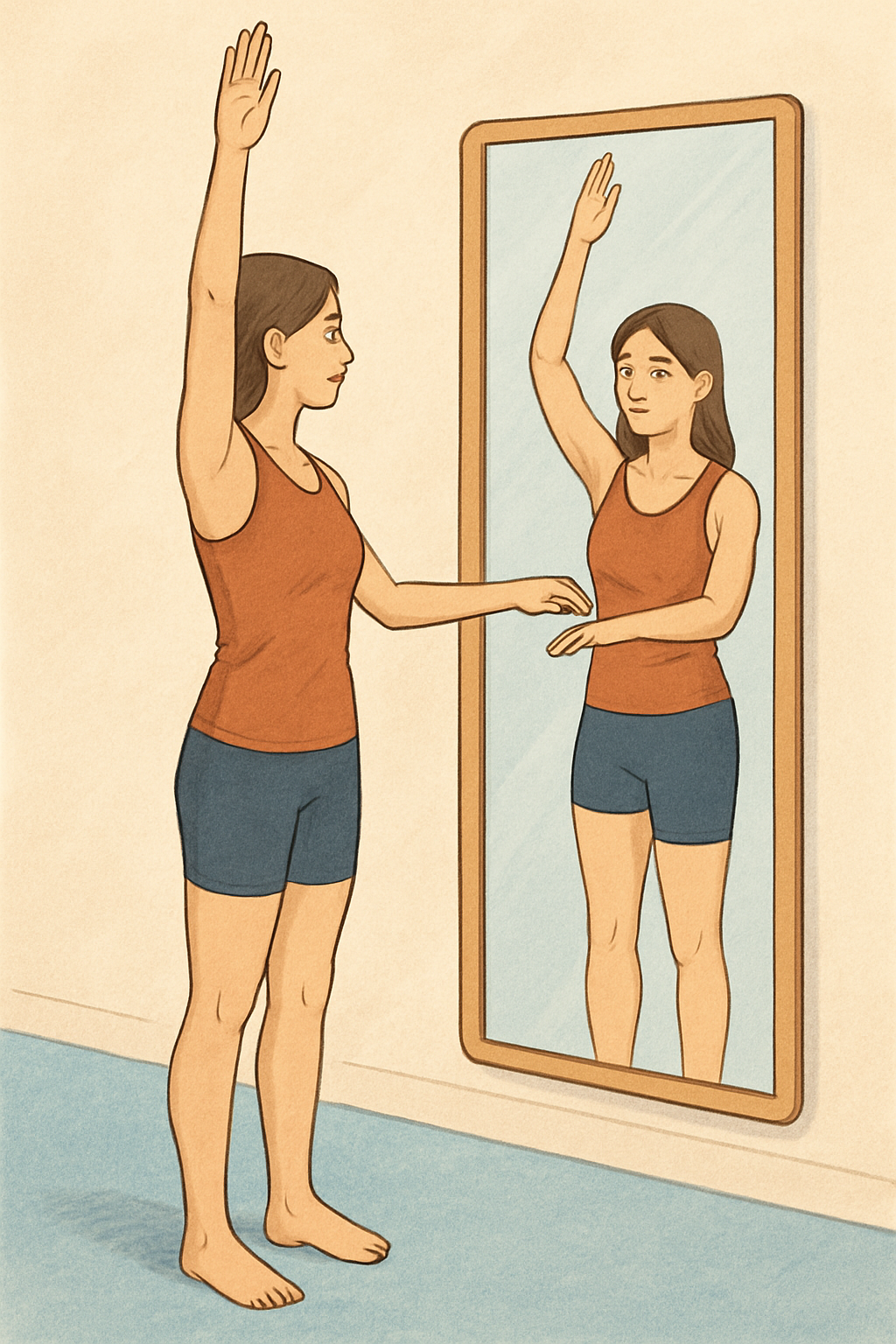
In this mindful dryland episode, you’ll practice your freestyle pull phase in front of a mirror — slow, controlled, and body-aware. Mirror work helps you improve posture, shoulder alignment, and symmetry, giving you visual feedback to build a stronger stroke pattern.
Perfect for beginners working on technique or experienced swimmers refining their form between swim sessions.
Powerful swimming begins with clear body awareness. Observe. Sense. Improve.
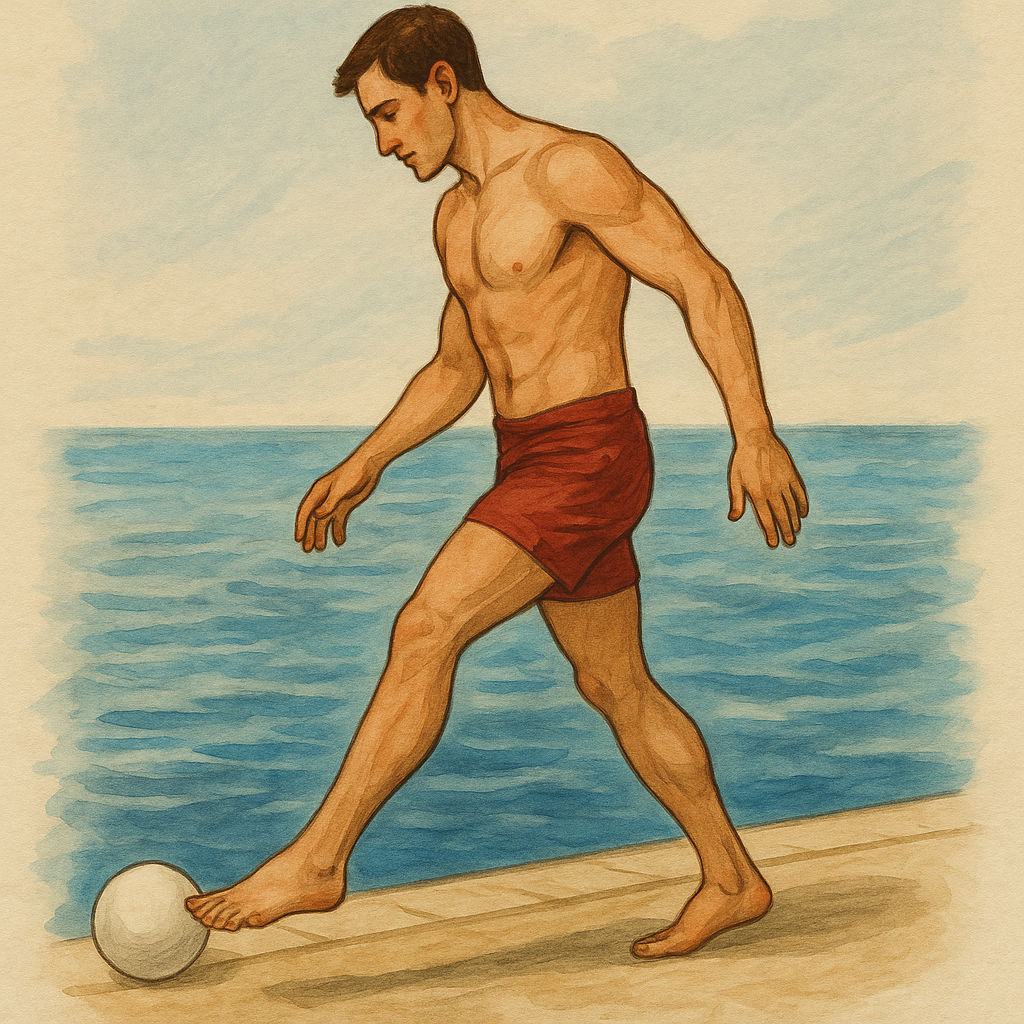
In this focused dryland session, we awaken the mind-body connection in your legs – the foundation of your swimming rhythm. Through simple, standing drills, you’ll explore leg awareness, hip engagement, and ankle mobility, all crucial for a smooth and effective freestyle kick.
Perfect for beginners learning proper kicking motion or swimmers who tend to disconnect their legs from the rest of their stroke. No equipment needed – just a small space and your full attention.
Train your legs to speak the language of water – with clarity, rhythm, and flow.
This dryland session brings the freestyle stroke into your room. Standing tall, you’ll simulate arm pulls, body rotation, and breathing – helping your body internalize the rhythm and flow of swimming, even away from the pool.
It’s ideal for anyone looking to improve technique awareness, build confidence, or prepare mentally before entering the water. Especially useful for beginners or those overcoming fear, this mindful practice helps you embody the movement like a fish in its natural element.
This energizing micro-session is designed to awaken your power zone — the area between your lower ribs and hips — with short, targeted activations. You’ll be standing tall, focusing on alignment, breath, and quick, controlled pulses that simulate the core control needed for strong freestyle swimming.
Perfect for days when you need a burst of focus, posture awareness, or a dryland prep before hitting the pool. Just a few minutes can reconnect you with your inner strength and rhythm.
Intimate yoga is a holistic practice designed to help individuals, especially women, reconnect with their bodies, strengthen their pelvic floor, and harmonize their hormonal system. It blends gentle movements, breathwork, mindfulness, and energy awareness to create balance, resilience, and inner peace.
Unlike conventional fitness routines, intimate yoga focuses on the deep inner muscles and energy centers that influence not only physical health but also emotional well-being and feminine vitality. Whether you’re recovering postpartum, dealing with menstrual discomfort, or simply looking to deepen your connection with your body, this practice offers a safe and empowering path forward.
Why Practice Intimate Yoga?
Strengthens the pelvic floor muscles
Supports hormonal regulation
Reduces menstrual discomfort and PMS
Enhances fertility and reproductive health
Improves posture and core stability
Cultivates emotional grounding and self-awareness
Understanding Heavy Periods: A Silent Struggle
Why are Heavy Periods a Problem?
Heavy menstrual bleeding, also known as menorrhagia, affects many women—especially those in puberty, perimenopause, or with hormonal imbalances such as PMOS or endometriosis. It can lead to:
Fatigue and anemia
Cramping and pelvic pain
Mood swings and emotional distress
Disruption to daily life and confidence
Many women suffer in silence, accepting heavy periods as something “normal.” But there are natural ways to support your body, and intimate yoga is one of the most effective.
Who is Affected?
Heavy periods can occur in:
Teenagers adjusting to early cycles
Women after childbirth
Women approaching menopause
Those with hormonal imbalances or thyroid conditions
Anyone under chronic stress
What Can Intimate Yoga Do?
With regular practice, intimate yoga can:
Reduce the intensity and duration of bleeding
Strengthen pelvic circulation and reduce congestion
Balance hormones through breath and movement
Offer emotional release and calming of the nervous system
Improve your relationship with your cycle and body
Intimate Yoga Routine for Heavy Periods
Goal: Strengthen the pelvic floor, improve circulation, and support hormonal balance
Practice Frequency: 3–5x per week
Pelvic Floor Awareness & Activation
Before starting, it’s important to find and engage your pelvic floor muscles. You can locate them by:
Inserting a clean finger into the vagina and contracting the surrounding muscles
Briefly stopping urine flow midstream (only to identify the muscles, not as an exercise)
Consulting a gynecologist or using a Kegel trainer
Using biofeedback tools to get real-time feedback on correct activation
Part 1: Intim Training (30–40 min)
Warm-Up (5–10 min)
Diaphragmatic Breathing Lie on your back, knees bent. Inhale deeply, expanding your belly. Exhale slowly, engaging your core.
Pelvic Tilts
Core & Pelvic Floor Strengthening (15–20 min)
Basic Kegels and Elevator Kegels
Bridge Pose with pelvic engagement
Bound Angle Pose
Bird-Dog Exercise – Core and coordination
Cool-Down & Relaxation (5–10 min)
Child’s Pose with deep breathing
Legs-Up-the-Wall for pelvic rest and hormone reset
Ardha Matsyendrasana – Detox and emotional release
Setu Bandhasana – Hormonal support and strength
Closing Relaxation (10 min)
Viparita Karani – Legs up the wall
Savasana – Deep rest and integration
Final Thoughts
Heavy periods don’t have to rule your life. With intimate yoga, you’re not just managing symptoms—you’re transforming your relationship with your body. These practices help you reclaim strength, softness, and balance, one breath at a time.
If you’re ready to explore this journey deeper, start with the routine above—or join me in a guided session. Your body will thank you.
In a world of constant stimulation and digital overwhelm, many men find themselves feeling disconnected — not only from others, but also from their own bodies. Performance pressure, tension, and mental fatigue can all manifest in subtle but deeply frustrating ways, especially when it comes to confidence, intimacy, and physical presence.
Intimate training—a mindful, physical approach to core and pelvic health—offers more than just physical benefits. It’s a powerful tool for:
Reclaiming internal control and body awareness
Rewiring mental patterns around desire and performance
Improving circulation and core strength
Releasing built-up tension in the hips and groin
Restoring confidence from the inside out
This isn’t just about muscles—it’s about grounding, centering, and rebuilding your connection to yourself.
When Something Feels “Off” — But You Don’t Know How to Fix It
You may not talk about it.
You may not even have words for it.
But you know the signs:
Moments when your body doesn’t respond the way it used to.
A disconnection between your thoughts, your breath, and your physical self.
A nagging sense that something fundamental is out of sync.
For men in their 30s, 40s, or beyond, it’s not uncommon to go through phases of physical or mental disconnection — often triggered or prolonged by stress, poor lifestyle habits, overexposure to artificial stimulation, or emotional avoidance.
But here’s the good news:
The body can relearn, rewire, and recover — with patience, consistency, and a more embodied approach.
A Gentle Yet Powerful Routine
Goal: Strengthen pelvic floor muscles, improve blood flow, release tension, and retrain the mind-body connection.
Pelvic Floor Awareness & Activation
As a man, you can locate your pelvic floor muscles in four different ways:
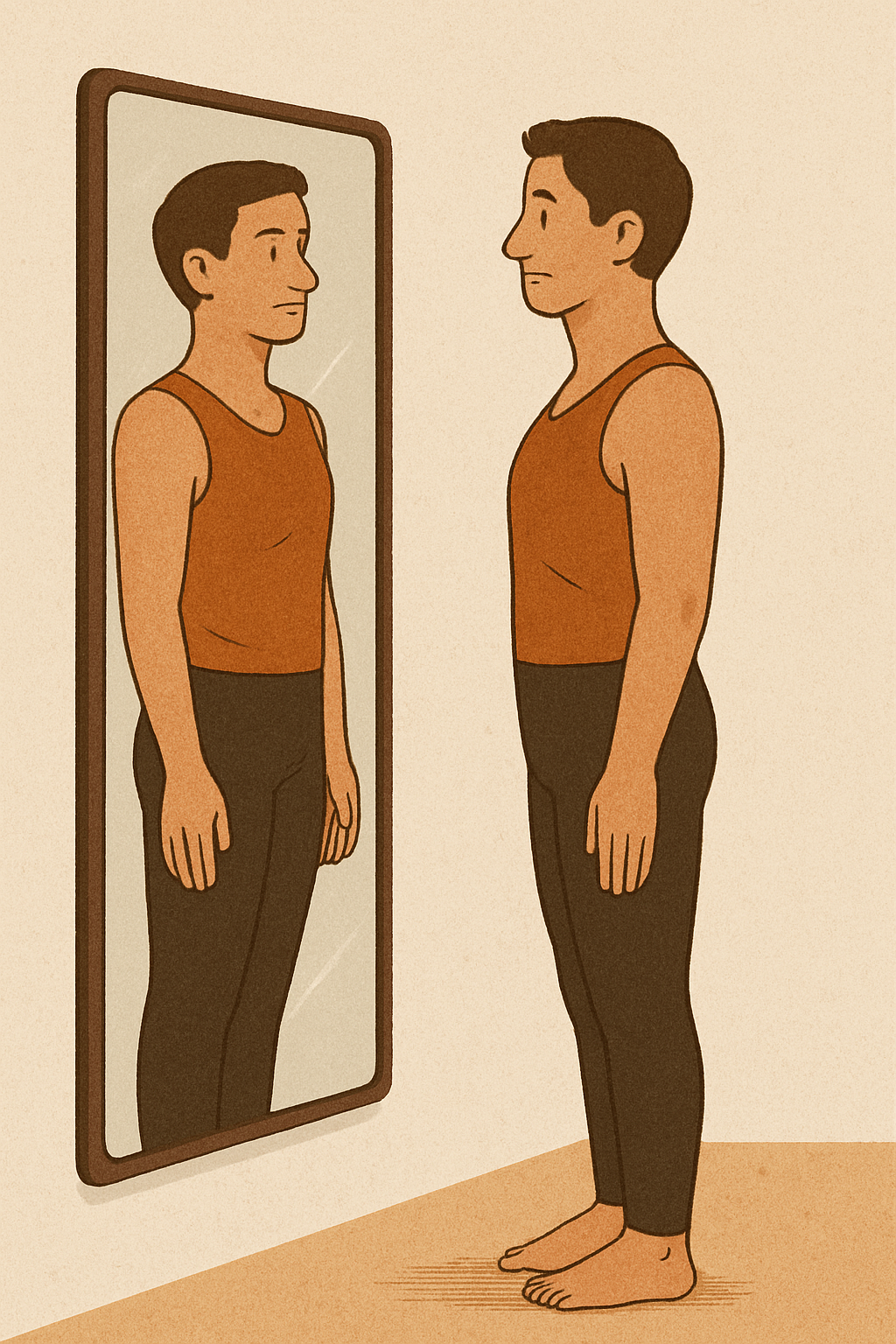
Stand naked in front of a mirror and contract or tighten your pelvic floor muscles. If you are using the correct muscles, you should feel the base of the penis draw in and see the scrotum lift.
Urine Flow Interruption(Occasional Use Only) Briefly stop your urine flow midstream to identify the muscles you are engaging. Take note of how it feels when you contract and release them. However, this method should not be used frequently, and Kegel exercises should not be performed with a full bladder, as this can lead to urinary tract infections.
Tighten the muscles you use to hold back a fart.
Insert a clean finger into your anus and squeeze it against your finger without using your abdominal, buttock, or thigh muscles to squeeze.
Frequency & Format
Practice: 4–6x per week
Duration: 25–30 minutes
Rule: Never overstrain. Quality over quantity.
Best time: Morning (to energize) or evening (to calm the system)
Warm-Up (5–10 min)
Diaphragmatic Breathing (3–5 min)
Lie on your back, knees bent
Inhale deeply, expanding your belly
Exhale slowly, gently engaging your core
Let your mind follow your breath into your lower body
Pelvic Tilts
Core & Pelvic Floor Strengthening (15–20 min)
Basic Kegels and Elevator Kegels
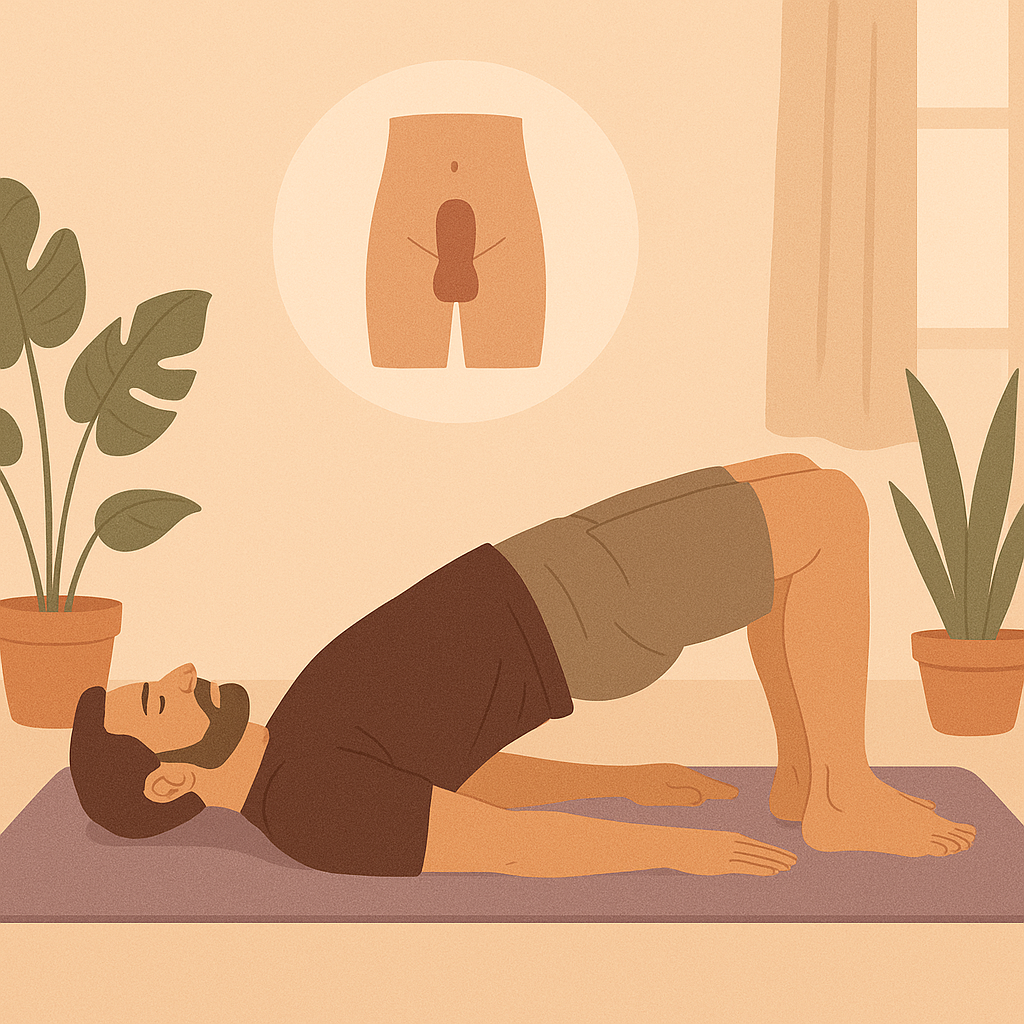
Bridge Pose
Bound Angle Pose
Deep Squat / Malasana
🔹 Cool-Down & Relaxation (5–10 min)
Child’s Pose
9. Legs-Up-the-Wall
Mental & Emotional Reset Tips
This journey isn’t purely physical. Mindset, emotion, and habit change matter just as much.
Rewiring from Within
Step away from overstimulation – Whether gradually or cold turkey
Train for real connection – Eye contact, emotional presence, physical touch
Reflect – What am I avoiding? What do I actually need?
Seek support if needed – A coach, therapist, or group can guide deeper shifts
Lifestyle Habits That Support the Process
Sleep: 7–8 hours
Nutrition: Real food, healthy fats, zinc & magnesium
Sunlight: Daily exposure helps mood and hormone balance
Limit alcohol & caffeine
Stay hydrated
What to Expect Over Time
Weeks 1–4: Mood swings, restlessness, maybe a “flatline”
Weeks 5–8: Mental clarity returns, more physical presence
Weeks 9–12+: Gradual rebuilding of energy, intimacy, and confidence
This isn’t just about “function.” It’s about restoring wholeness, self-trust, and a more natural way of being in your body.
If this resonates, you’re not alone.
And you’re not broken.
This is your body asking you to return to it.
One breath, one contraction, one moment at a time.